A typical Great Barrier Reef day trip from Cairns costs AUD 300–360 all-in once you add the mandatory Environmental Management Charge (EMC) and current fuel surcharges to the headline fare. Independent 2026 price checks confirm this band, and it sits noticeably higher than the sub-AUD 300 figures many older guidebooks still quote. Budget a little more if you plan to dive, take a helicopter flight, or depart from Port Douglas.
Here’s a quick snapshot of what to expect across the three tiers most travellers choose between:
- Budget (inner reef / island ferry): AUD 100–150 per person, shorter time on the water, calmer and shallower reef sites
- Mid-range (outer reef day trip): AUD 180–280 headline fare, typically AUD 300–360 all-in with EMC and fuel levy
- Premium (large pontoon or liveaboard): AUD 280–400+ per day, gourmet meals, semi-submersibles, and extended reef time
The EMC is a statutory charge collected by your tour operator on behalf of the Great Barrier Reef Marine Park Authority. It applies to almost every commercial reef activity, and whether it’s folded into the advertised price or listed separately depends entirely on the operator.
Key takeaways
Outer-reef day trips from Cairns cost AUD 300–360 all-in once the EMC and fuel surcharges are added to the headline fare, making realistic budgeting essential before comparing operators.
| Point | Details |
|---|---|
| All-in outer reef cost | Budget AUD 300–360 for a full-day outer reef trip from Cairns, including EMC and fuel levy. |
| EMC is mandatory | The Environmental Management Charge applies to almost every commercial reef activity and must be either included in the fare or shown separately. |
| Add-ons raise the total | An introductory dive or helicopter flight can significantly increase your final spend. |
| Port Douglas costs more | Comparable outer-reef trips from Port Douglas typically run AUD 40–100 more per ticket than Cairns departures. |
| Aussie Loop curates clearly | Aussie Loop listings flag EMC and fuel levy inclusion, making it easier to compare real all-in prices before booking. |
Table of Contents
- How much do Great Barrier Reef tours cost by type?
- What does a tour price usually include?
- What are the mandatory charges you must budget for?
- What add-ons are worth paying for?
- How does your departure port affect what you pay?
- How to save money on reef tours without missing out
- How many days should you spend at the reef?
- Sample fares: what you’d actually pay in 2026
- How we checked these prices
- Why mid-range outer reef trips offer the best value for most visitors
- Aussie Loop makes it easier to find the right reef tour
- Sources
- FAQ
How much do Great Barrier Reef tours cost by type?
Price differences between tour categories come down to three things: how far out to sea the vessel travels, what’s on board, and how long you’re out there. A 2026 price guide puts the headline ranges like this:
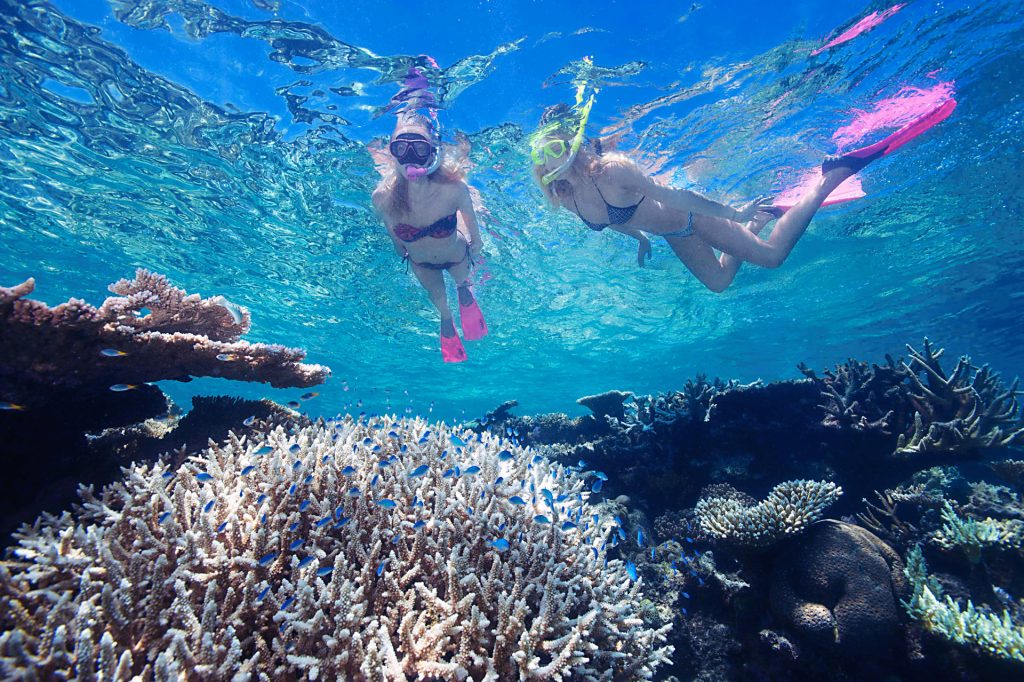
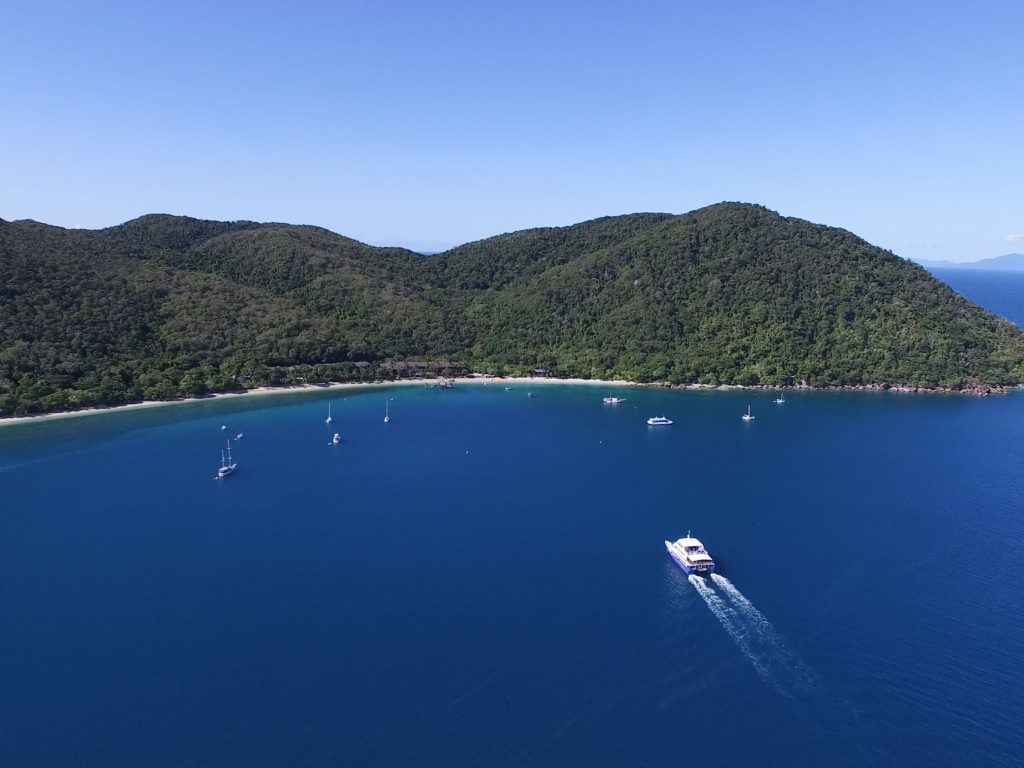
For first-time visitors weighing up options, the full-day outer reef trip gives you the most reef for your money. You reach the Outer Barrier where coral density and marine life diversity are genuinely spectacular, and the longer time in the water justifies the higher fare. The Fitzroy Island day tour is a solid budget-friendly alternative if you want a taste of reef snorkelling without the full outer-reef price tag.
- Best value for first-timers: full-day outer reef catamaran trip
- Best for families on a budget: island day trip with snorkel gear included
- Best for serious divers: liveaboard, where the per-dive cost drops significantly
What does a tour price usually include?
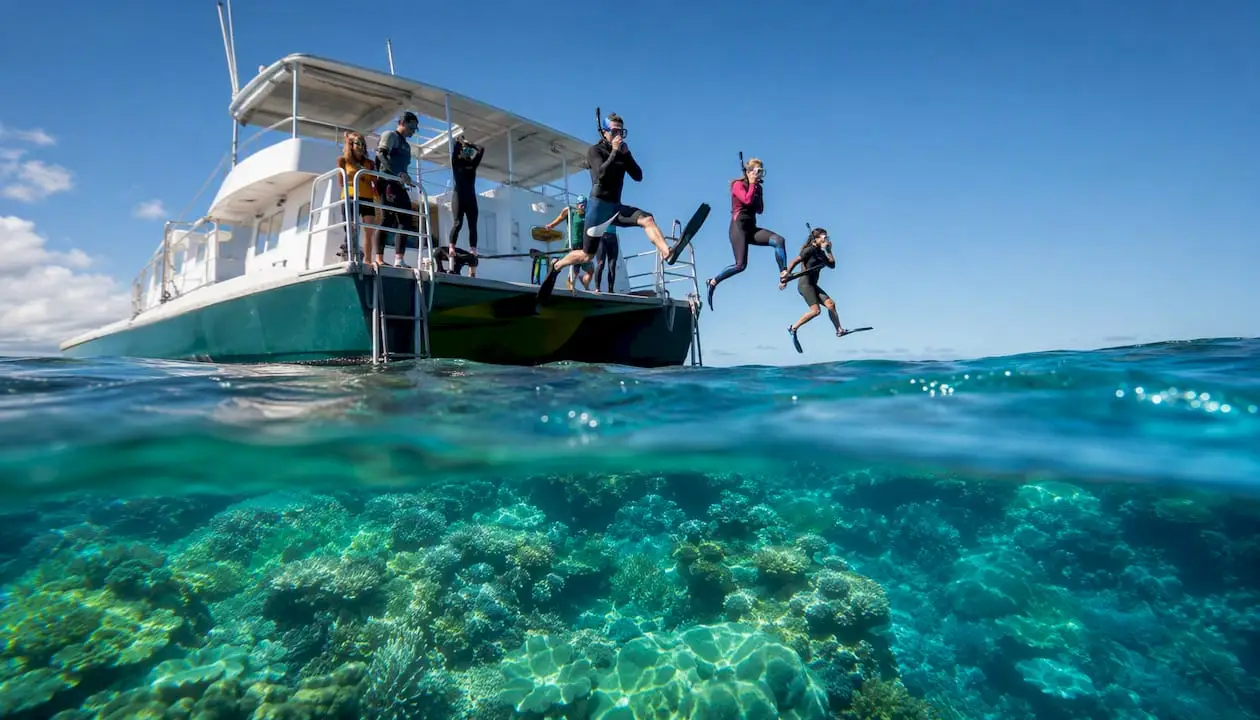
Most outer-reef day trips bundle a reasonable set of inclusions into the headline fare. Knowing what’s standard helps you spot the operators who are genuinely competitive versus those who look cheap until you read the fine print.
Typical inclusions:
- Return boat transfers from the Cairns or Port Douglas marina
- Snorkelling equipment (mask, fins, snorkel)
- Stinger suit (mandatory in stinger season, October–May)
- Lunch or a light meal
- Marine biologist or reef naturalist commentary
- Glass-bottom boat viewing or semi-submersible access (on larger pontoon trips)
Common exclusions:
- EMC (sometimes listed separately rather than folded in)
- Fuel surcharge (often added at checkout or at the wharf)
- Introductory or certified scuba dives
- Underwater camera hire or photo packages
- Helicopter scenic flights
- Gratuities for crew
Pro Tip: Watch for the phrase “price from” on operator booking pages. It almost always means the EMC and fuel levy are not yet included. Always scroll to the booking summary before comparing fares across operators.
The Reef Authority requires permit holders to represent the EMC correctly in advertised prices, meaning it must either be folded into the total or shown as a clear separate line item. If you can’t find it on a booking page, ask before you pay.
What are the mandatory charges you must budget for?
The EMC is the one fee no reef visitor avoids. It’s a statutory charge set under the Great Barrier Reef Marine Park (Environmental Management Charge — Tourist Programs) Act, and it funds reef management and conservation programs.
Reef Authority guidance explains that the charge applies at either a full-day or part-day rate depending on the length of your trip. Trips longer than three hours generally attract the full-day rate; shorter excursions or those with late departures or early returns may qualify for the part-day rate. Your operator collects the EMC from you and remits it quarterly to the Authority.
Beyond the EMC, expect these common operator surcharges:
- Fuel levy: varies by operator, typically AUD 5–20 per person; some operators have made this permanent following recent fuel price rises
- Booking or credit card fee: AUD 2–5 per booking on some platforms
- Seasonal stinger suit fee: usually included in the headline fare during stinger season, but worth confirming
- Wharf or port levy: a small charge (AUD 3–8) applied by some departure terminals
Fuel surcharges, in particular, are the main reason 2026 all-in costs sit above older guidebook figures. The base ticket hasn’t always changed, but the fuel levy added at checkout has quietly pushed many outer-reef trips past the AUD 300 mark.
What add-ons are worth paying for?
Add-ons can genuinely transform a reef trip, but they also add up fast. Typical add-ons include introductory scuba dives, certified two-tank dives, helicopter scenic flights, camera housing hire, photo or video packages, sea scooter rentals, and private charters, with prices varying widely by operator.

The introductory dive is the add-on most first-timers find worth every dollar. Seeing the reef from the surface is beautiful; seeing it from three metres below, surrounded by coral bommies and reef fish, is something else entirely. If your budget allows one add-on, that’s the one.
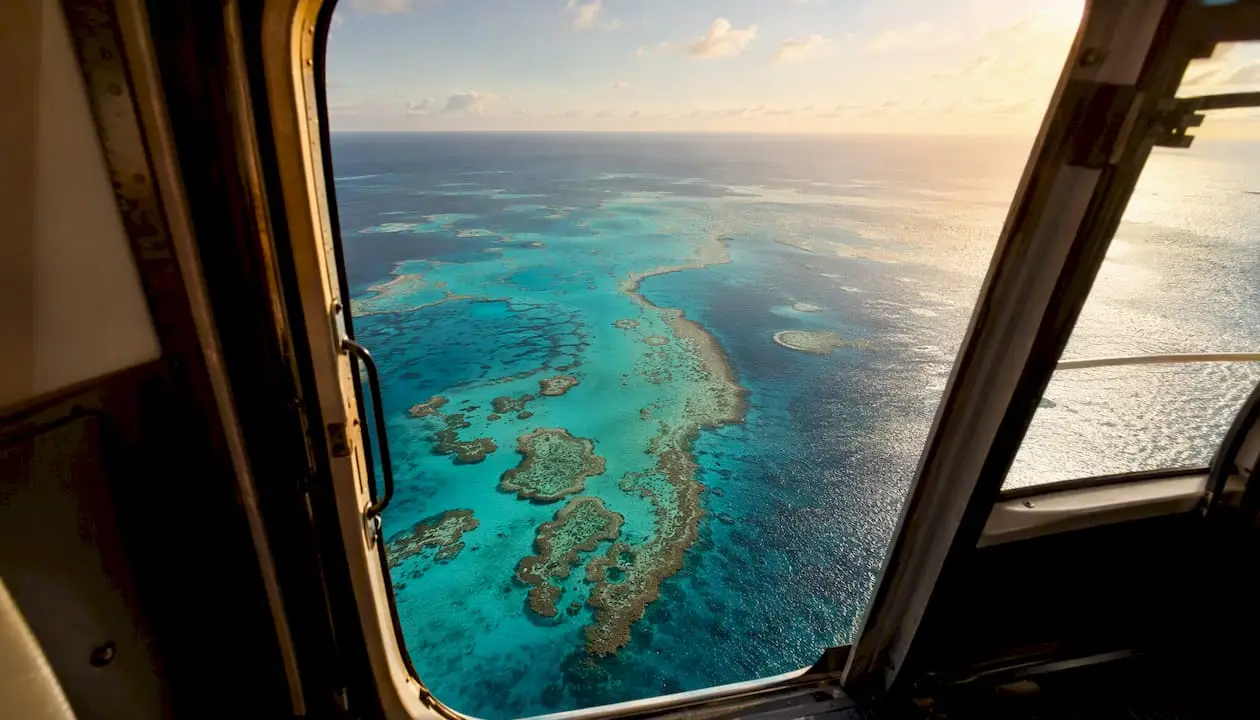
Helicopter flights are spectacular but genuinely optional. The reef looks extraordinary from the water; the aerial view is a bonus, not a necessity. If you’re torn, check whether the flight is available on the day rather than pre-booking, since weather cancellations are common.
How does your departure port affect what you pay?
Where you board your boat matters more than most travellers realise, both for price and for the reef experience itself.
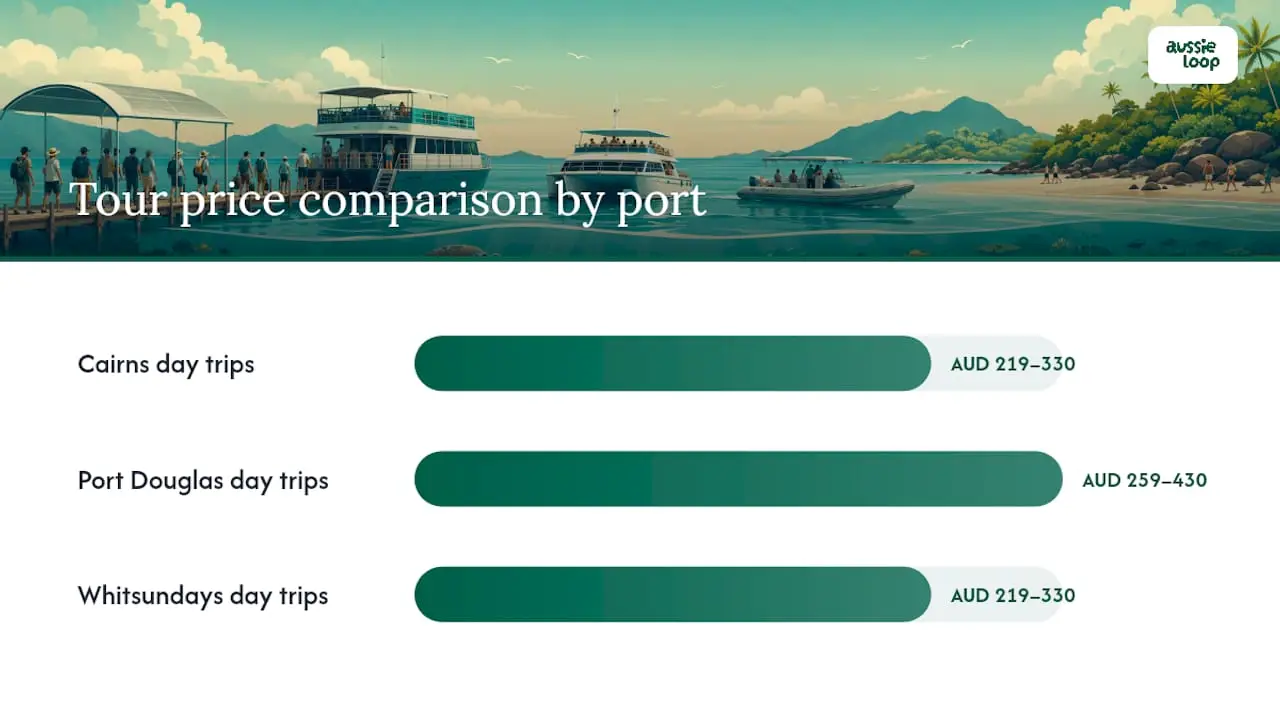
Cairns is the main hub, with the widest range of operators and the most competitive pricing. Outer-reef day trips from Cairns typically sit in the AUD 219–330 headline range, and the sheer volume of departures means you’ll find options across every budget tier.
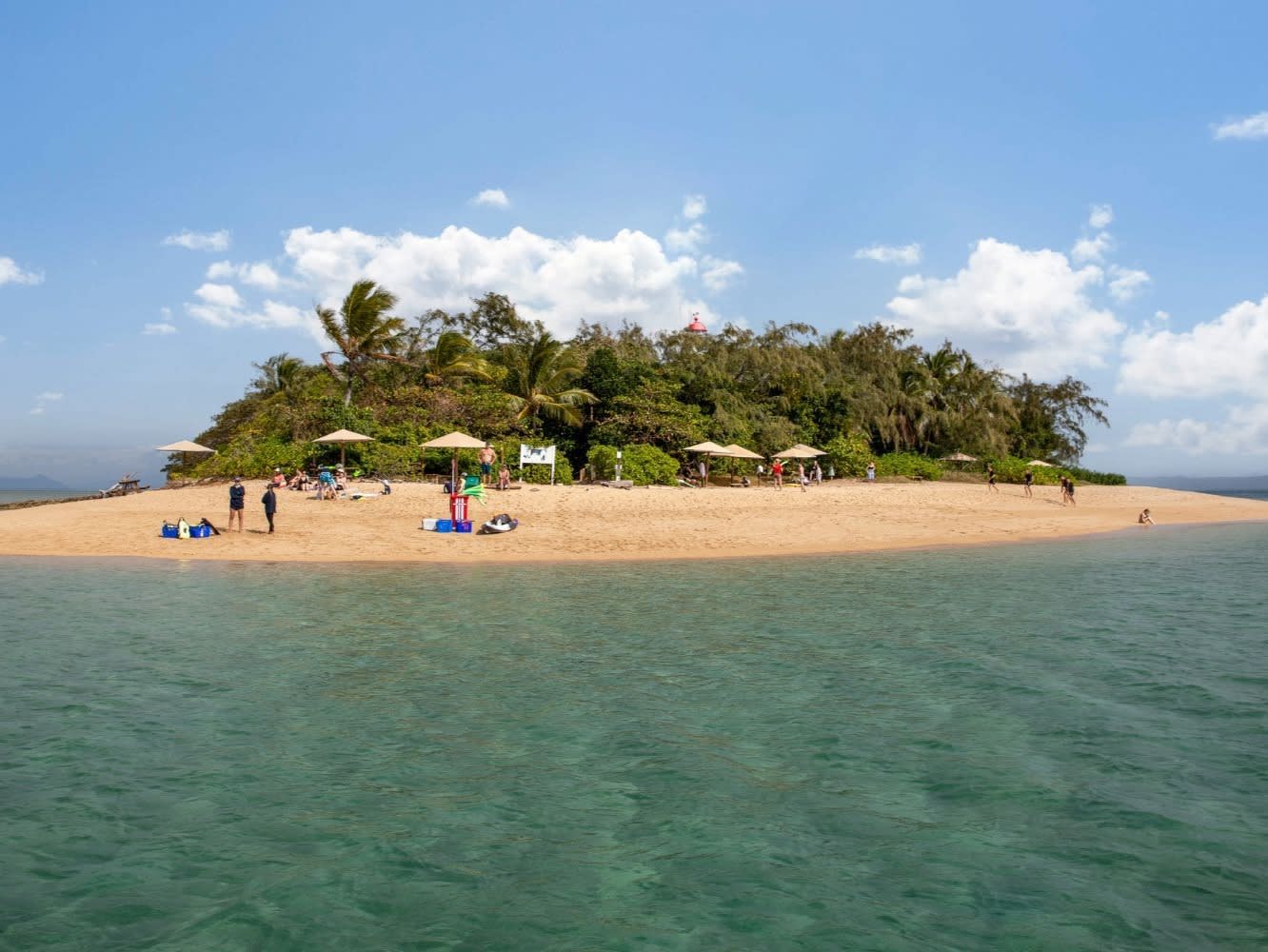
Port Douglas, about 70 km north of Cairns, tends to run AUD 40–100 more per ticket for comparable outer-reef trips. The premium reflects a different product mix: Port Douglas operators lean toward smaller vessels, more exclusive experiences, and access to the Low Isles and Agincourt Reef. You’re paying for a quieter, more curated day.
Whitsundays and Hamilton Island offer a completely different reef experience, focused on the southern Coral Sea and iconic sailing itineraries. Day trip prices from the Whitsundays are broadly comparable to Cairns, though liveaboard and sailing charter options are more prominent here.
A few seasonal factors worth knowing:
- Stinger season (October–May): stinger suits are mandatory and usually included, but confirm this before booking
- Wet season (December–March): some operators reduce schedules; occasional weather cancellations can affect value, particularly for liveaboards
- Shoulder season (April–June, September–October): often the sweet spot for pricing and conditions; some operators offer off-peak discounts
If you’re flying into Cairns, factor in airport transfers to your marina departure point. A taxi or rideshare from Cairns Airport to the Reef Fleet Terminal costs roughly AUD 25–35. Flexible flight dates can also meaningfully reduce your total trip cost when airfares are part of the budget.
How to save money on reef tours without missing out
Cutting costs on a reef trip doesn’t mean settling for a lesser experience. A few smart moves can save you AUD 50–100 without touching the quality of your time on the water.
Booking tactics:
- Book directly with the operator where possible; third-party platforms sometimes add booking fees
- Look for combo packages that bundle a reef day trip with a Daintree or rainforest tour; the per-activity cost often drops
- Family fares are common on larger catamaran operators; children under 15 typically pay 50–60% of the adult fare
- Check the operator’s own website for early-bird or last-minute specials not always listed on aggregators
Timing tactics:
- Weekday departures are sometimes cheaper than weekend sailings on the same vessel
- Shoulder season (April–June) tends to offer better pricing and calmer conditions than peak summer
- Last-minute bookings can yield discounts if the vessel has unsold capacity, but you risk missing out on popular dates
What to bring to avoid paying extra:
- Your own prescription dive mask if you wear glasses (rental corrective masks add AUD 10–20)
- A waterproof phone case instead of paying for camera hire
- Sunscreen and a rash vest to avoid purchasing on board
Pro Tip: Always compare the all-in total, not the headline fare. Add the EMC, fuel levy, and any gear hire you’ll need before comparing two operators side by side. A ticket that looks AUD 30 cheaper can end up costing more once surcharges are applied.
For booking smarter across your whole trip, understanding how airline pricing works can help you time your flights to Cairns or the Whitsundays more cost-effectively.
How many days should you spend at the reef?
One day is enough to see the Great Barrier Reef and come away genuinely moved. Whether one day is enough depends on what you want from the experience.
- Backpackers and short-stay visitors: one full-day outer-reef trip covers the highlights; combine it with a half-day snorkel or island trip if you have a second day
- Families: one full day on the outer reef plus an island day trip (like Fitzroy Island) gives kids variety without reef fatigue
- Snorkellers who want more: two days, mixing an outer-reef catamaran trip with a different departure point or reef site
- Certified divers: a two-night liveaboard is worth the investment; you’ll complete six or more dives across multiple reef sites that day-trip vessels never reach
The liveaboard cost premium is real, but the per-dive cost drops considerably when you spread accommodation, meals, and gear hire across multiple dives. For serious divers, it’s the most cost-efficient way to see the reef properly.
Sample fares: what you’d actually pay in 2026
These worked examples show how headline fares convert to realistic all-in totals. Figures are based on published operator ranges and 2026 price checks.
| Tour type | Headline fare | EMC + fuel levy | Likely add-ons | All-in total |
|---|---|---|---|---|
| Half-day inner reef | AUD 100–150 | AUD 15–25 | Snorkel gear (often included) | AUD 110–155 |
| Full-day outer reef (Cairns) | AUD 219–280 | AUD 20–35 | Intro dive AUD 70–180 | AUD 280–400+ |
| Island day trip | AUD 100–150 | AUD 15–20 | Camera hire AUD 30–60 | AUD 100–150 |
| Liveaboard (per night) | AUD 300–360 | AUD 20–35 | Certified dives often included | AUD 300–360 |
How we reached the all-in totals:
- Added the EMC (full-day rate for trips over three hours, part-day for shorter trips)
- Added a typical fuel levy of AUD 10–20 per person
- Included one likely add-on per category (intro dive for outer reef, camera hire for island)
- Excluded gratuities (discretionary) and helicopter flights (optional premium)
The Cairns-to-Port Douglas price delta is typically AUD 40–100 per ticket for comparable outer-reef products. A Port Douglas outer-reef day trip that costs AUD 320 headline in Cairns might run AUD 360–420 from Port Douglas, reflecting the premium vessel and smaller group sizes.
How we checked these prices
Aussie Loop compiled these figures from a combination of sources to give you the most reliable 2026 picture available.
- Operator booking pages: headline fares and inclusions checked directly on operator sites for Cairns and Port Douglas departures
- Great Barrier Reef Marine Park Authority pages: EMC rates, charge categories, and permit holder obligations verified against official Reef Authority guidance
- Independent 2026 price audits: cross-referenced against published price guides and consumer travel resources to confirm all-in totals
- Legislative instrument: the statutory framework for tourist program charges reviewed to confirm EMC definitions and liability rules
All-in totals were calculated by adding the headline fare, the applicable EMC rate (full-day or part-day), a typical fuel levy, and one representative add-on per category. Gratuities and helicopter flights were excluded from base totals as genuinely optional. Sample fares reflect a date window of early-to-mid 2026 and will shift with fuel prices and any future EMC adjustments.
Why mid-range outer reef trips offer the best value for most visitors
The reef experience you get on a budget inner-reef trip and the one you get on a full-day outer-reef catamaran are genuinely different products. Coral density, water clarity, and marine biodiversity all improve significantly at outer-reef sites. For most first-time visitors, the AUD 100–150 price difference between a budget inner-reef option and a mid-range outer-reef trip is the most worthwhile spend in their entire Cairns itinerary.
That said, Aussie Loop’s curation approach is built around matching travellers to the right tier for their priorities, not pushing everyone toward the most expensive option. A family with young children might get more joy from a calmer island day trip than from a full-day catamaran. A solo backpacker on a tight budget can still have a memorable reef experience on a half-day inner-reef trip.
What Aussie Loop consistently flags in its listings is EMC and fuel levy transparency. If an operator’s booking page doesn’t clearly show whether the EMC is included, that’s worth a direct question before you commit. The Reef Authority’s guidance on EMC advertising is clear: the total price should either include the EMC or show it as a separate line item. Anything less than that makes genuine price comparison impossible.
For a deeper look at how the tour categories compare on inclusions and reef access, the Aussie Loop reef tour comparison guide breaks it down clearly.
Aussie Loop makes it easier to find the right reef tour
Sorting through dozens of reef operators, decoding “price from” listings, and working out whether the EMC is actually included takes time most travellers don’t have. Aussie Loop curates reef tours selected by locals who know the difference between a genuinely great outer-reef day and a crowded pontoon experience that looks good in photos.

Every listing on Aussie Loop flags inclusions clearly, notes whether the EMC and fuel levy are folded into the fare, and links directly to the operator’s booking page so there are no surprises at checkout. Whether you’re after a half-day reef snorkel from Cairns or want to compare the full range of outer reef, inner reef, and island options side by side, the Aussie Loop reef tour comparison is the fastest way to find a trip that fits your budget and your expectations. Browse the curated options at Aussieloop and book with confidence.
Sources
Before you book, these are the sources worth checking directly:
- What are the charges? | Reef Authority
- Division 3—Amount of charges and payment (legislation)
- Great Barrier Reef Cost: The Real $300 Day-Trip Math (2026)
- How Much Do Great Barrier Reef Tours Cost? | 2026 Price Guide
FAQ
How much does a Great Barrier Reef tour cost from Cairns?
A full-day outer-reef day trip from Cairns costs roughly AUD 300–360 all-in once the Environmental Management Charge and fuel surcharges are added to the headline fare of AUD 219–330.
How many days are enough for the Great Barrier Reef?
One full day on the outer reef is enough for most visitors to have a genuinely memorable experience; divers or those wanting multiple reef sites benefit from a two-night liveaboard.
Which type of Great Barrier Reef tour offers the best value?
A full-day outer-reef catamaran trip from Cairns gives first-time visitors the best balance of reef quality, inclusions, and price, typically costing AUD 300–360 all-in compared to AUD 110–155 for a shorter inner-reef trip with noticeably less coral diversity.
Is the Environmental Management Charge always included in the ticket price?
Not always. Some operators fold the EMC into the headline fare while others list it separately at checkout; the Reef Authority requires operators to represent it clearly, so check the booking summary before paying.
Can you save money by booking a reef tour in advance?
Booking directly with the operator and travelling in shoulder season (April–June or September–October) tends to offer the best pricing; last-minute deals exist but availability on popular outer-reef vessels is limited.