June through October is the best time to visit the Great Barrier Reef for most travellers. The dry season delivers calmer seas, lower humidity and the clearest underwater visibility of the year. September and October are the sweet spot for first-timers and families, combining warm water and gentle conditions without the peak-season crowds of July school holidays. If you’re chasing specific wildlife, the trade-offs shift:
- Best overall conditions: June–October (dry season, clearest water, calmest seas).
- Best for families and first-timers: September–October (warm, calm, less crowded than July)
- Best for whale watching: July–September (humpbacks) and June–July (dwarf minke whales, Ribbon Reefs)
- Best value: April–May or October–November (shoulder season, good conditions, lower prices)
- Year-round option: Southern reef islands like Lady Elliot and Lady Musgrave
If budget is your priority, shoulder months give you acceptable visibility and far fewer crowds. If you’re after coral spawning or turtle hatching, you’ll need to plan around November–December, which means navigating the early wet season. More on all of that below.
Key takeaways
The single most reliable advice for the Great Barrier Reef is this: visit between June and October for the best conditions, choose your format before you choose your dates, and always build in a buffer day.
| Point | Details |
|---|---|
| Best overall months | June–October delivers the clearest visibility, calmest seas and most reliable trip conditions. |
| Best for families and first-timers | September and October combine warm water, gentle seas and fewer crowds than peak July. |
| Shoulder season value | April–May and October–November offer good conditions at lower prices with shorter booking queues. |
| Safety in stinger season | Stinger season runs November–May/June; wear a stinger suit and confirm your operator uses nets. |
| Aussie Loop for curated options | Aussie Loop’s reef tour comparison matches your format, base and season to the right experience. |
Table of Contents
- How do the dry and wet seasons affect reef conditions?
- Month-by-month wildlife calendar for the reef
- Which gateway suits your season and priorities?
- Best months for each reef activity
- Jellyfish season, cyclone risk and staying safe
- Practical booking advice: crowds, pricing and how many days to allow
- How do you choose between a day trip, island stay or liveaboard?
- What the shoulder season gets right (and most guides miss)
- Aussie Loop helps you find the right reef experience
- Sources
- FAQ
How do the dry and wet seasons affect reef conditions?
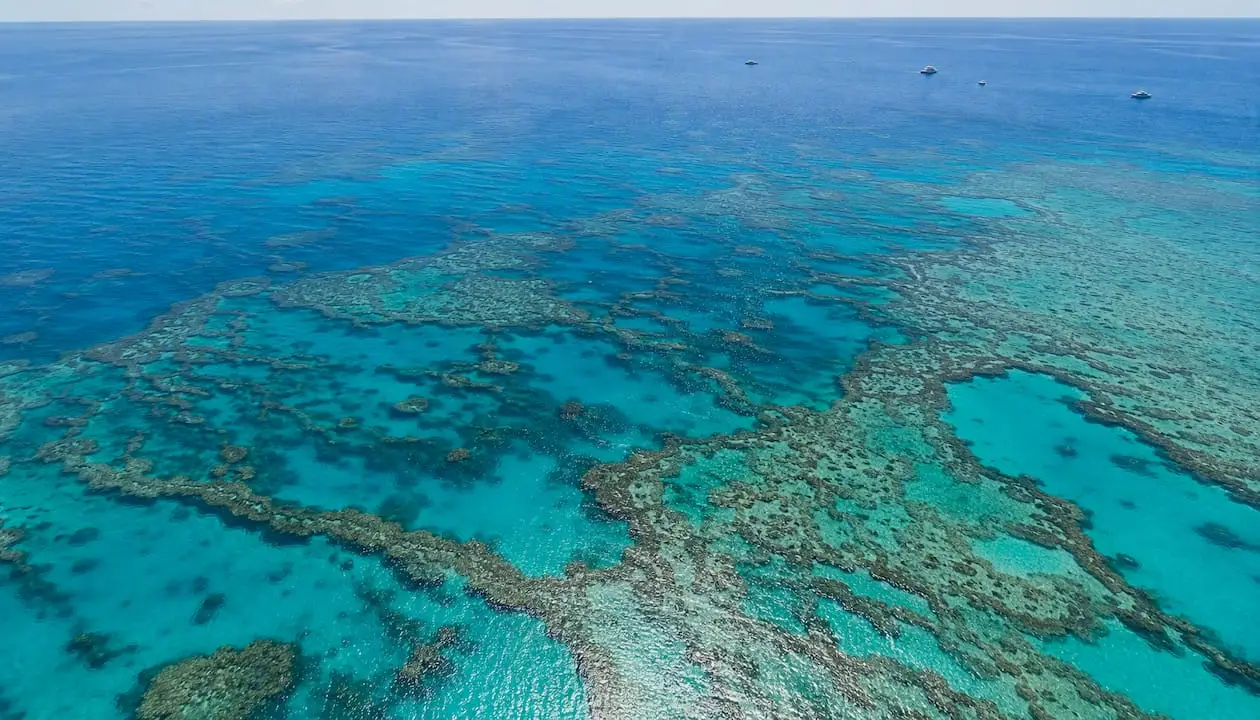
The Great Barrier Reef spans roughly 2,300 kilometres of Queensland coastline, and the seasonal shift between dry and wet affects every part of it, though not always at the same time.
The dry season runs from around May or June through to October. Trade winds keep the air cool and the seas relatively flat. Underwater visibility during this window is typically at its best, often reaching good clarity on the outer reef. Snorkelling and diving operators run more reliably, cancellations are less frequent, and the overall travel experience is more comfortable.
The wet season covers roughly December through March, with November and April acting as transition months. Northern Queensland sees heavy rainfall, high humidity and the occasional tropical cyclone during this period. Visibility can drop significantly after rain events, particularly on the inner reef where runoff from rivers muddies the water. That said, water temperatures are warmest at this time (around 27–29°C in the north), and the reef itself is alive with activity.
| Season | Months | Visibility | Sea State | Water Temp (Cairns) |
|---|---|---|---|---|
| Dry | June–October | good clarity on the outer reef | Calm to moderate | around 27–29°C in the north |
| Shoulder | April–May, Nov | good clarity | Moderate | around 27–29°C in the north |
| Wet | December–March | 5–15 m (variable) | Choppy at times | 27–29°C |
A few practical points worth knowing before you book:
- Outer reef sites tend to maintain better visibility than inner reef sites during the wet season, due to distance from river runoff.
- Cyclone risk is real but concentrated: most cyclones that affect reef trips occur between January and March, and operators cancel trips when conditions are unsafe.
- The shoulder months of April–May and October–November offer solid value with conditions that are genuinely good, not just “acceptable.”
Month-by-month wildlife calendar for the reef
Timing your trip around a specific wildlife event can turn a great reef visit into an unforgettable one. Here’s what’s happening when.
| Month | Wildlife / Event | Location |
|---|---|---|
| June–July | Dwarf minke whales | Ribbon Reefs (north) |
| July–September | Humpback whale migration | Whitsundays, Hervey Bay |
| October–March | Green turtle nesting | Raine Island, Lady Elliot |
| January–April | Turtle hatching | Southern reef islands |
| November–December | Coral spawning | Reef-wide (lunar-timed) |
| May–November | Manta ray aggregations | Lady Elliot Island |
| June–October | Best reef fish diversity | Outer reef, reef-wide |
A few notes on the geography. Dwarf minke whales are almost exclusively a northern phenomenon, concentrated around the Ribbon Reefs north of Cairns and best accessed by liveaboard. Humpbacks move through the Whitsundays and central reef from July, peaking in August. Turtle nesting at Raine Island is one of the largest green turtle rookeries on earth, though most visitors see nesting activity at Lady Elliot Island, which is far more accessible.
Coral spawning deserves special mention. It typically occurs over a few nights in November or December, triggered by rising water temperatures and the lunar cycle. Exact dates vary year to year, so you can’t book around a fixed calendar date. Operators who run night dives during this window will advertise when conditions look right, usually a week or two out.
Pro Tip: If dwarf minke whales are your priority, book a Ribbon Reef liveaboard for June or early July at least three to four months in advance. These itineraries sell out fast and there’s no reliable day-trip alternative for this encounter.
Which gateway suits your season and priorities?
Where you base yourself shapes everything from your boat ride to your wildlife options. Each gateway has a distinct character and a seasonal sweet spot.
-
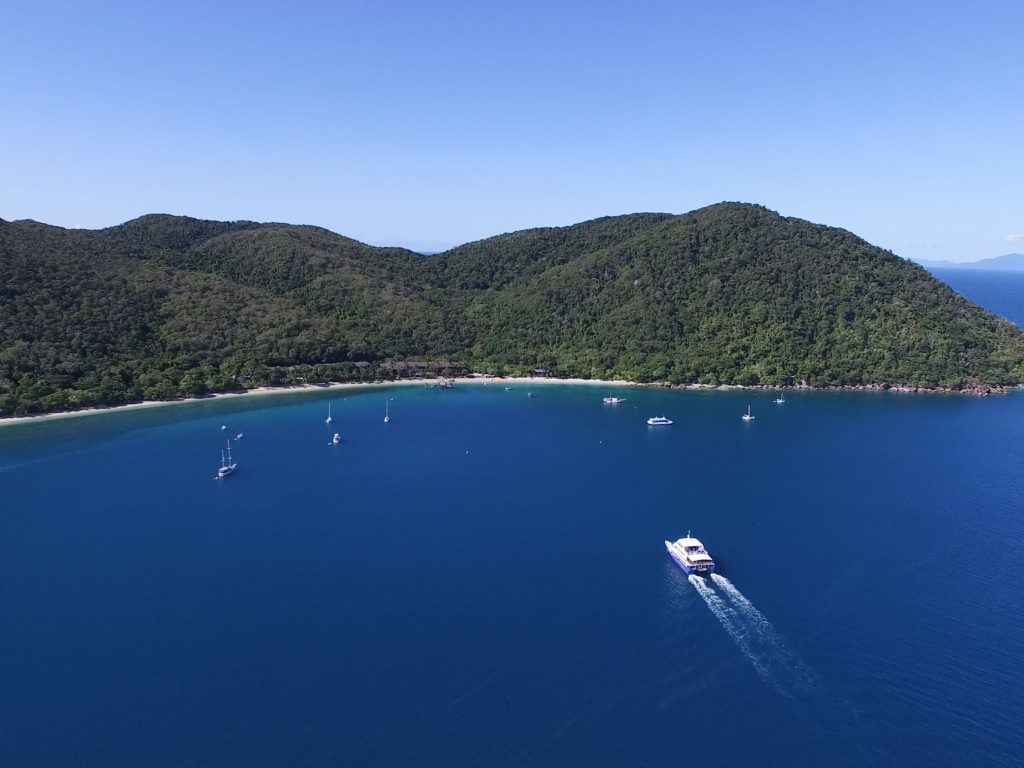
Cairns is the most accessible hub, with direct international flights and the widest range of day trips, from budget pontoon tours to premium outer reef experiences. It performs well across the dry season and is the most practical base for first-timers. The half-day snorkelling tour from Cairns is a good entry point if you’re short on time. During the wet season, Cairns trips still run but expect more cancellations and variable visibility.
-
Port Douglas sits about an hour north of Cairns and gives faster access to the outer reef, including the Ribbon Reefs and Agincourt Reef. It’s a quieter, more boutique base with a strong dry-season offering. The Cairns vs Port Douglas comparison is worth reading if you’re deciding between the two.
-
Whitsundays / Airlie Beach is the gateway to the central reef and the iconic Whitehaven Beach. Sailing and catamaran charters dominate here. Humpback whale watching is excellent from July to September. The Whitsundays can be visited year-round, though cyclone season (January–March) brings real risk of trip disruptions.
-
Townsville is the departure point for the SS Yongala wreck dive, one of Australia’s best dive sites and accessible year-round. It’s less visited than Cairns but offers a genuinely different reef experience, particularly for divers.
-
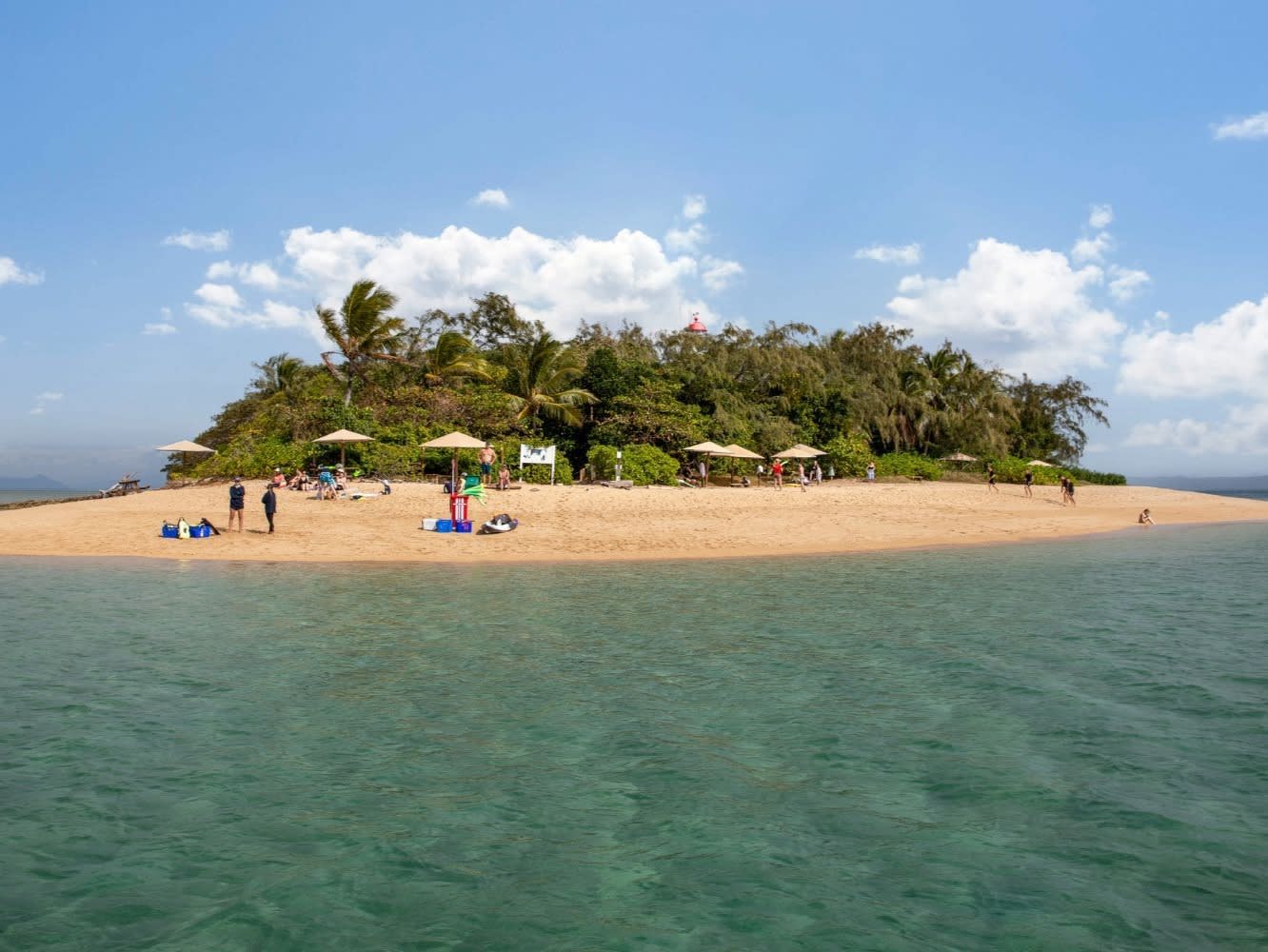
Lady Elliot Island and Lady Musgrave Island anchor the southern end of the reef. These islands are accessible year-round and carry lower stinger risk than tropical north Queensland during summer. Lady Elliot is renowned for manta rays from May through November. Lady Musgrave is a coral cay surrounded by a lagoon that’s ideal for snorkellers.
Pro Tip: If you’re visiting between December and March and want reliable reef access, head south. Lady Elliot and Lady Musgrave offer far more predictable conditions than Cairns or Port Douglas during the wet season.
Best months for each reef activity
Matching your activity to the right month makes a bigger difference than most travellers realise.
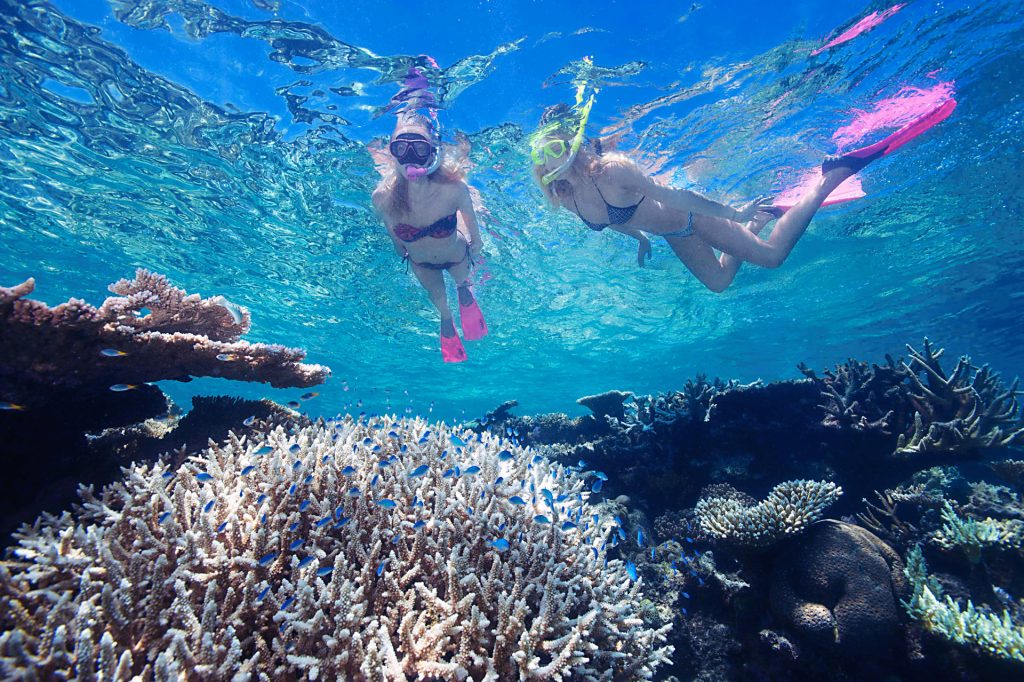
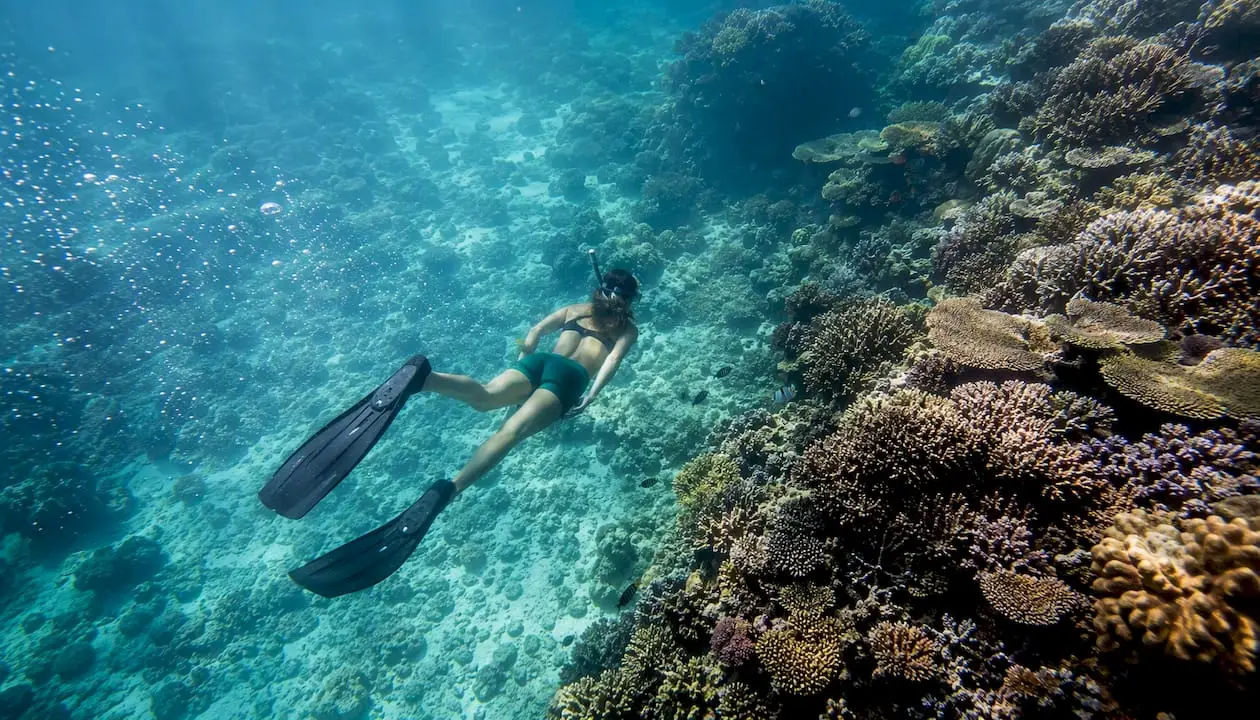
Snorkelling and scuba diving: June through October gives the best visibility and calmest surface conditions. September and October are particularly good for beginners, with warm water and gentle seas. For experienced divers chasing specific sites, May and November also deliver solid conditions at lower prices.
Whale watching: Humpbacks move through the Whitsundays and central reef from July to September. Dwarf minke whale encounters on the Ribbon Reefs peak in June and July, and these are almost exclusively available through liveaboard operators.
Turtle nesting and hatching: Nesting runs from October through March at sites like Lady Elliot Island. Hatching follows roughly six to eight weeks after nesting, meaning January through April is prime hatching season at the southern islands.
Manta rays: Lady Elliot Island is the standout site, with aggregations most reliable from May through November. Some operators report year-round sightings, but the dry season window is the most consistent.
Liveaboards: The June–July minke whale season on the Ribbon Reefs is the most specialised liveaboard window. Coral spawning night dives in November–December attract dedicated divers. For general outer reef liveaboards, the entire dry season works well.
Pro Tip: Book liveaboards for the minke whale season (June–July) or peak dry season (July–August) at least three to six months ahead. Day trips to the outer reef can usually be booked a week out in low season, but don’t leave it to the day before in July or August.
Jellyfish season, cyclone risk and staying safe
Seasonal hazards on the reef are real, but they’re well-managed by operators and local authorities. Knowing what to expect means you won’t be caught off guard.
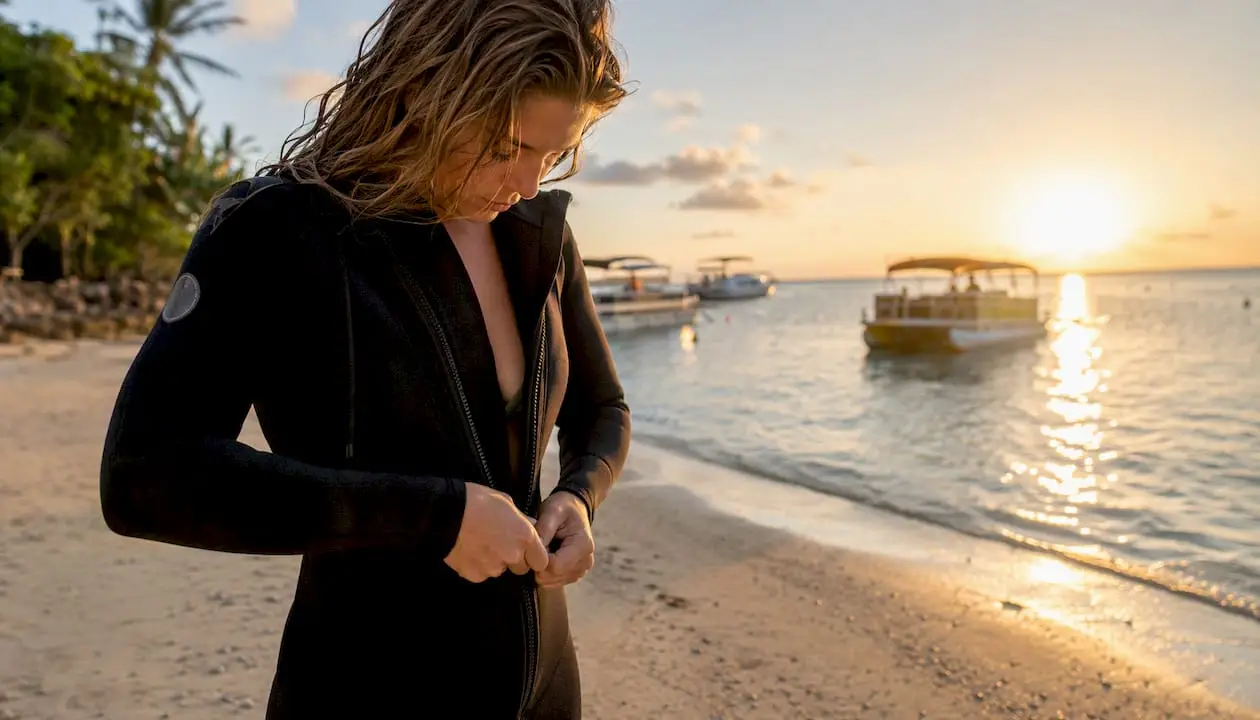
Stinger (jellyfish) season runs roughly from November through to May or June in tropical north Queensland. Box jellyfish and Irukandji are the two species of concern. Popular beaches use stinger nets and most tour operators provide stinger suits during this period. Wearing a full stinger suit in the water is the single most effective precaution.
Cyclone season overlaps significantly with stinger season, running mainly from November through April. Most cyclones that affect reef trips form between January and March. Operators cancel trips when conditions are unsafe, and travel insurance that covers weather cancellations is strongly recommended during this window.
Safety checklist before you book:
- Ask your operator whether stinger suits are included or available for hire during November–May.
- Check whether the beach or pontoon site uses stinger nets.
- Confirm the operator’s cancellation and refund policy for weather events.
- Take out travel insurance that covers trip cancellations due to weather or cyclones.
- Check lifeguard patrol status at any beach you plan to swim from independently.
Pro Tip: Even during stinger season, outer reef snorkelling and diving remain relatively safe because box jellyfish tend to stay in shallow, coastal waters rather than the open ocean. A stinger suit and a reputable operator are your best protection.
The southern reef islands — Lady Elliot and Lady Musgrave — carry lower stinger risk than tropical north Queensland during summer, making them a practical wet-season alternative for snorkellers.
Practical booking advice: crowds, pricing and how many days to allow
Peak season (July–August, particularly Queensland school holidays) brings the highest prices and the most crowded day-trip pontoons. Book outer reef day trips at least one to two weeks ahead during this window. Liveaboards for peak dry season should be secured three to six months out.
Shoulder season (April–May and October–November) is where savvy travellers find the best balance. Prices drop, crowds thin out, and conditions remain genuinely good. You can often book day trips a few days in advance during shoulder months.
Low season (December–March) offers the lowest prices but the highest weather risk. If you’re flexible and budget-conscious, this can work, particularly if you’re based in the south or willing to wait out a weather window.
How many days to allow:
- Minimum (one day): A full-day outer reef trip from Cairns or Port Douglas gives you two snorkel or dive sites. You’ll see the reef, but you won’t have a backup if the trip is cancelled.
- Better (two to three days): Allows one reef day plus a backup day for weather, and time for a Daintree or rainforest experience alongside the reef.
- Best (four or more days): Opens up a liveaboard option, multiple reef zones, or a combination of island stay and day trips.
Always build in at least one buffer day if reef access is the main reason you’re visiting. Weather cancellations happen even in the dry season, and a rescheduled trip the following day is far better than missing the reef entirely.
Pro Tip: Pack reef-safe sunscreen (required by most operators), a rash vest, and motion-sickness tablets if you’re prone to seasickness on open-water crossings. The outer reef crossing from Cairns takes roughly 90 minutes each way.
How do you choose between a day trip, island stay or liveaboard?
The format of your reef experience shapes everything: how much water time you get, which sites you reach, and what wildlife you’re likely to encounter. Coral CoE’s planning guidance is clear that this is the single most impactful decision you’ll make.
Work through these questions:
- How much time do you have? One day points to a day trip. Three or more nights opens up a liveaboard.
- How comfortable are you in open water? If you’re new to snorkelling or prone to seasickness, a calmer inner reef or island stay may suit you better than a two-hour open-ocean crossing.
- What’s your priority wildlife event? Dwarf minke whales and coral spawning night dives are liveaboard-only experiences.
- What’s your budget? Day trips are the most affordable entry point; island resorts sit in the mid-range; liveaboards vary widely but generally cost more per day.
Day trips are the most accessible option. A half-day snorkelling tour from Cairns suits travellers with limited time or those who want a taste of the reef without committing to a full day on the water. Full-day trips typically visit two outer reef sites and include lunch.
Island stays at Lady Elliot or Heron Island put you on the reef 24 hours a day. You can snorkel straight off the beach at dawn before the day-trippers arrive, and the wildlife encounters (manta rays, turtles, reef sharks) are often more intimate.
Liveaboards offer the most remote access and the most water time per day. They reach sites that day trips never visit, and they’re the only realistic way to experience the Ribbon Reefs, dwarf minke whales, or a proper multi-day dive itinerary. The reef tour comparison on Aussie Loop lays out the practical differences between outer reef, inner reef and island formats to help you decide.
Pro Tip: If you’re torn between a day trip and a liveaboard, consider a two-night liveaboard as a middle ground. It’s long enough to reach remote sites and experience a dawn dive, but short enough that it doesn’t feel like a major commitment.
What the shoulder season gets right (and most guides miss)
Most reef guides treat June–August as the obvious answer and leave it there. That’s not wrong, but it misses something worth saying plainly: October is arguably the best single month on the reef, and it’s consistently underrated.
By October, the July–August crowds have cleared. Water temperatures are climbing back toward 26°C in the north. Visibility remains excellent. Humpback whales are still passing through the Whitsundays in early October. And prices haven’t yet spiked for the Christmas holiday rush. You get dry-season conditions without dry-season crowds.
The same logic applies to May. The wet season has wound down, the reef is recovering from summer, and the trade winds haven’t fully established yet, so seas can be a touch choppier than July. But for travellers who’ve done their research and are willing to check the forecast, May often delivers a genuinely excellent reef experience at a noticeably lower price.
The other thing most guides underplay is how much the southern reef changes the calculus. Lady Elliot Island and Lady Musgrave Island don’t follow the same seasonal rhythm as Cairns. They’re accessible year-round, they carry lower stinger risk in summer, and the manta ray season at Lady Elliot runs from May through November. If you’re planning a reef trip in January or February and you’re set on Queensland, the southern islands are where you should be looking, not Cairns.
The reef rewards travellers who match their timing to their actual priorities instead of defaulting to the peak-season consensus.
Aussie Loop helps you find the right reef experience
Picking the right month is only half the decision. The other half is finding a tour that actually delivers on what the season promises.

Aussie Loop curates reef tours and Queensland experiences selected by locals who know the difference between a crowded pontoon and a genuinely memorable day on the water. Whether you’re after a half-day snorkel from Cairns, a multi-day liveaboard itinerary, or a Cairns base that pairs reef days with a Daintree afternoon and nocturnal tour or the Kuranda Gold Class Rail and Skyrail experience, the platform makes it straightforward to compare options and book with confidence. Browse the full reef and Queensland tour listings on Aussie Loop and lock in your dates before the season fills up.
Sources
These are the key references used throughout this guide. Check them directly for the most current operator and conditions information before you travel.
- Planning Your Great Barrier Reef Trip: A Complete Guide
- Jellyfish Safety & Information | Cairns & Great Barrier
- Great Barrier Reef Guide: Is It Worth Visiting in 2026? – WORLDLYA
- Great Barrier Reef Guide: Is It Worth Visiting in 2026? – WORLDLYA
Always verify current conditions, operator cancellation policies and stinger advisories with your tour provider before travel.
FAQ
What month is best to visit the Great Barrier Reef?
June through October is the best overall window, with September and October particularly well-suited to first-timers and families thanks to calm seas and warm water.
When should you avoid the Great Barrier Reef?
January through March carries the highest cyclone risk and the most variable visibility, especially in tropical north Queensland. If you must travel then, consider the southern reef islands, which are more sheltered.
How many days do you need for the Great Barrier Reef?
A minimum of two days gives you one reef day plus a weather buffer. Four or more days opens up liveaboard options and multiple reef zones, which is the best way to experience the outer reef properly.
Which Australian city is best for visiting the Great Barrier Reef?
Cairns is the most accessible gateway, with the widest range of day trips and direct international flights. Port Douglas, about an hour north, gives faster access to the outer reef and a quieter base for those who prefer it.
Is it safe to swim at the Great Barrier Reef during stinger season?
Outer reef snorkelling remains relatively safe during stinger season because box jellyfish tend to stay in shallow coastal waters. Wear a stinger suit provided by your operator and check whether your site uses stinger nets.