
The safest reef-minded choice in Australia is a broad-spectrum mineral sunscreen listing zinc oxide or titanium dioxide as the active filter, rated SPF 30 or higher, with an AUST L or AUST R number you can verify on the Therapeutic Goods Administration’s Australian Register of Therapeutic Goods (ARTG). That single sentence is the whole shopping decision. Everything below explains why it holds up.
Before you reach the checkout, run through these quick checks:
- Prefer mineral actives: zinc oxide and titanium dioxide are the filters most widely recommended for reef-minded use. Both are approved by the TGA for therapeutic sunscreens.
- Flag these ingredients for closer scrutiny: oxybenzone, octinoxate, octocrylene, homosalate, and avobenzone. None are outright banned in Australia, but regulators have reviewed several of them for safety and environmental reasons.
- Check the full ingredient list, not just the front-of-pack claim. “Reef safe” and “mineral” on the label mean nothing without the ingredient panel to back them up.
- Look for the AUST number on the pack. Search it on the ARTG to see the complete formulation.
- Choose water-resistant formulas for swimming or snorkelling, and plan to reapply every two hours or after towel-drying.
Pro Tip: Flip the bottle over before you buy. The AUST L or AUST R number sits near the barcode or on the back panel. Type it into the ARTG search at tga.gov.au and you will see every ingredient the manufacturer registered, including ones that do not appear on the front.
Key takeaways
Choosing a reef-friendlier sunscreen in Australia means picking a mineral-filter product with SPF 50+, verifying the full ingredient list via the ARTG, and combining it with physical sun protection to reduce chemical wash-off into the water.
| Point | Details |
|---|---|
| Prefer mineral filters | Choose zinc oxide or titanium dioxide as the active filter for reef-minded and sensitive-skin use. |
| Verify via AUST number | Search the ARTG at tga.gov.au to see the complete registered formulation, not just the front-of-pack claim. |
| “Reef safe” is unregulated | No single legal definition exists in Australia; treat broad environmental claims sceptically unless the brand provides substantiating evidence. |
| Layer your sun protection | Combine SPF 50+ sunscreen with a UPF 50+ rash shirt and shade to cut the total sunscreen load entering the water. |
| Aussie Loop reef tours | Aussie Loop features Queensland reef and coastal tours with operators who provide reef etiquette guidance and reef-minded sunscreen advice on board. |
Table of Contents
- What “reef safe,” “reef friendly,” and “mineral” actually mean in Australia
- How sunscreen ingredients can affect coral and marine life
- What Australian regulators have done recently and what it means for you
- How to choose a reef-friendlier sunscreen in Australia
- Mineral sunscreen options you can find in Australian stores
- Practical tips from reef tour operators and snorkel guides
- How to dispose of sunscreen packaging responsibly
- Sources
- FAQ
What “reef safe,” “reef friendly,” and “mineral” actually mean in Australia
“Reef safe” is a marketing phrase, not a regulated standard. No single legal definition exists in Australia, and no government body certifies a sunscreen as reef-safe before it reaches the shelf. The Australian Sunscreen Council advises consumers not to rely on broad slogans and to check ingredient panels and AUST numbers instead, treating any environmental claim cautiously unless the brand can substantiate it with evidence.
“Mineral” is similarly slippery. In sunscreen chemistry, it refers to products whose active UV filters are inorganic: zinc oxide, titanium dioxide, or both. These are sometimes called physical filters, though that name is a slight misnomer. Research from the TGA confirms that both mineral and chemical filters primarily work by absorbing UV radiation rather than simply reflecting it off the skin surface.
The bigger problem is what “mineral” does not tell you. A UNSW analysis found that roughly 34% of sunscreen ARTG entries that listed only mineral actives on the front of pack contained additional organic UV-absorbing chemicals in the full registered ingredient list. That is about one in three products calling themselves mineral-only while carrying chemical co-formulants. Front-of-pack claims are a starting point, not a finish line.
How sunscreen ingredients can affect coral and marine life
Lab studies and some field research show that certain UV filters can harm coral at measurable concentrations, particularly oxybenzone and octinoxate, which have been associated with coral bleaching, DNA damage in larvae, and disrupted reproduction in marine organisms. The mechanisms include direct chemical toxicity, photoproducts formed when UV filters degrade in sunlit water, and film residues that accumulate in sediment near popular swimming sites.
The strength of this evidence varies considerably. Lab studies typically use concentrations higher than those measured in most reef environments, and translating lab findings to real-world reef risk is genuinely difficult. NOAA and international researchers have flagged oxybenzone and octinoxate as the compounds of greatest concern, while the evidence for others like octocrylene and homosalate is less settled. That uncertainty cuts both ways: it is not a reason to dismiss reef risk, but it is also not a reason to stop wearing sunscreen altogether.
Zinc oxide and titanium dioxide largely remain on the skin surface and rinse off as particles rather than dissolving into the water column. Some studies have examined nano-particle forms of these minerals and found mixed results, so many reef-conscious brands now specify non-nano formulations. If that distinction matters to you, look for “non-nano zinc oxide” on the ingredient list.
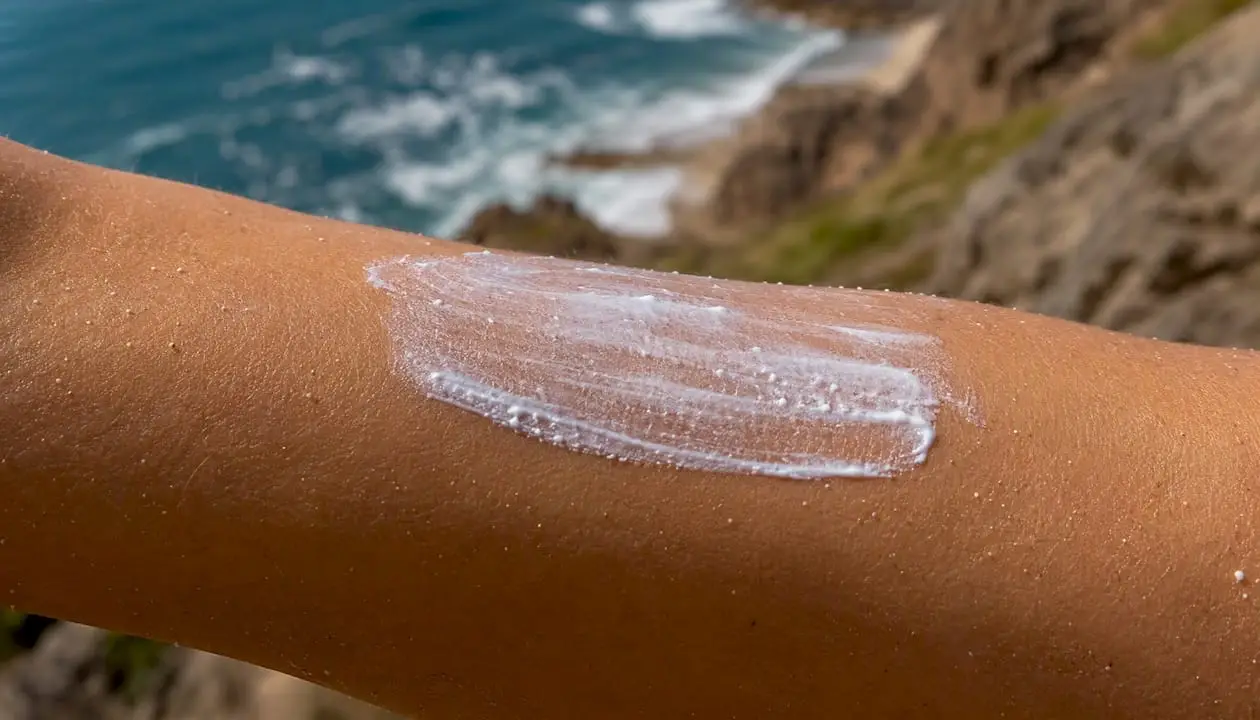
Skin cancer is a genuine and serious risk in Australia. Sunscreen remains one of the most effective tools for preventing it, and abandoning it entirely in the name of reef protection would be a poor trade-off. The goal is choosing a formulation that protects your skin while reducing the chemical load entering the water.
What Australian regulators have done recently and what it means for you
Australian regulators have moved meaningfully on sunscreen safety and environmental claims in recent years, and the actions directly affect what you can trust on a label.
The TGA conducted a safety review of seven active sunscreen ingredients using the Australian Sunscreen Exposure Model (ASEM), a tool built specifically to reflect Australian application patterns and sun exposure habits. The review assessed margin of safety for filters including homosalate and oxybenzone and recommended additional regulatory controls where safety margins were low. Because Australian sunscreen use is among the highest in the world, the ASEM modelling can produce different conclusions from overseas assessments. So, local TGA guidance may be more restrictive than what you read from US or European sources.
The ACCC’s action is the most striking recent development for shoppers. In 2025, the ACCC commenced Federal Court proceedings against Edgewell, the owner of Banana Boat and Hawaiian Tropic, alleging the company made false or misleading “reef friendly” claims for many products between 2020 and 2024. ABC News reported that the case has drawn significant public attention to how loosely environmental claims can be applied to sunscreen marketing.
What this means practically:
- A “reef friendly” badge on a Banana Boat or Hawaiian Tropic product does not confirm the claim is substantiated. The ACCC proceedings are ongoing; no finding of liability has been made, but the allegations alone signal that these claims warrant scrutiny.
- Any brand making an environmental claim should be able to point to specific evidence: third-party testing, certification, or ingredient-level data.
- The TGA’s safety reviews mean some chemical filters may face concentration limits or labelling changes. Checking the ARTG entry for a product gives you the registered formulation, which is more reliable than front-of-pack marketing.
How to choose a reef-friendlier sunscreen in Australia
Pick a mineral-filter sunscreen with SPF 50+, broad-spectrum coverage, water resistance, and a verifiable AUST number. Here is how to work through that in practice.
| Evaluation dimension | What to look for | Why it matters |
|---|---|---|
| Active filter type | Zinc oxide and/or titanium dioxide | Mineral filters are preferred for reef-minded use and sensitive skin |
| SPF and broad spectrum | SPF 30 minimum; SPF 50+ for outdoor and water use | Broad-spectrum covers both UVA and UVB; higher SPF extends protection window |
| Water resistance | “Water resistant” rating on pack (40 or 80 minutes) | Reduces wash-off into the water; reapply after towel-drying regardless |
| Sensitive skin suitability | Fragrance-free, no added preservatives where possible | Mineral filters are generally gentler; check for known irritants |
| Labelling transparency | AUST L or AUST R number; full ingredient list accessible on ARTG | Lets you verify the complete formulation beyond front-of-pack claims |
Step-by-step checklist:
- Read the full ingredient list, not just the active filter section. Look for oxybenzone, octinoxate, octocrylene, homosalate, or avobenzone as secondary ingredients even in products marketed as mineral.
- Find the AUST number and search it on the ARTG at tga.gov.au to view the complete registered formulation.
- Confirm “broad spectrum” appears on the label, meaning the product filters both UVA and UVB.
- Choose “water resistant” for any swimming or snorkelling activity, and note the stated resistance time (40 or 80 minutes).
- Consider texture and cosmetic feel. A sunscreen you will actually reapply is better than a theoretically superior one sitting in your bag. Tinted mineral formulas reduce white cast significantly.
Pro Tip: In-store, the AUST number is usually printed in small type near the barcode or on the bottom of the tube. The ARTG search at tga.gov.au takes about 30 seconds and shows you every ingredient the manufacturer registered, including co-formulants that never appear on the front panel.
Mineral sunscreen options you can find in Australian stores
Mineral-based sunscreens are widely stocked in Australian pharmacies, supermarkets, and surf shops. The options below represent the kinds of products and brands you will encounter, grouped by use case.
Daily face SPF (lightweight or tinted):
- Invisible Zinc offers zinc oxide-based formulas in tinted and untinted versions, widely available at Chemist Warehouse, Priceline, and major supermarkets. The tinted range reduces white cast noticeably.
- Surf Mud uses a high-concentration zinc oxide paste, originally designed for surfers. It is opaque and highly water-resistant, making it better suited to nose and shoulder spots than full-face coverage.
- Sun & Earth positions itself as an eco-focused mineral option with zinc oxide as the primary active, available through health food retailers and online.
Family and body SPF (higher SPF, water-resistant):
- Cancer Council sunscreens include mineral-filter options alongside their chemical-filter range. Check the ingredient list carefully, as the brand produces both types. Their SPF 50+ formulas are widely trusted and broadly available.
- Sun Bum markets mineral SPF 50+ options with zinc oxide as the active. The brand is available in surf shops and some pharmacies across Australia; check the AUST number to confirm the local formulation.
Reef-minded options for snorkelling:
- Stick and lotion formats from zinc oxide-based brands are preferred by many snorkel guides over sprays and aerosols, which can disperse product into the air and water more readily.
- Look for “non-nano zinc oxide” if you want to minimise particle size concerns in marine environments.
Availability note: Always verify the ARTG entry for any product you buy. Formulations can differ between markets, and front-of-pack claims in Australia must align with the registered ingredient list. Banana Boat and Hawaiian Tropic products remain on shelves while ACCC proceedings are ongoing; if you choose those brands, check the full ingredient list rather than relying on any “reef friendly” badge.
Practical tips from reef tour operators and snorkel guides
Reapply frequently and layer sun protection methods to reduce the total amount of sunscreen entering the water. That is the consistent message from operators running snorkel trips on the Great Barrier Reef and in the Whitsundays.
Apply sunscreen at least 15 minutes before entering the water. This gives the formula time to bind to the skin, reducing immediate wash-off when you first submerge. For a full day on the water, reapply every two hours and immediately after towel-drying, regardless of the water-resistance rating on the pack.
Rash shirts and UV-protective clothing are the single most effective way to cut your sunscreen load in the water. A long-sleeve rash shirt rated UPF 50+ covers the majority of your body surface, meaning you only need sunscreen on exposed areas like your face, neck, and hands. Many reef tour operators now provide or hire rash shirts on board.
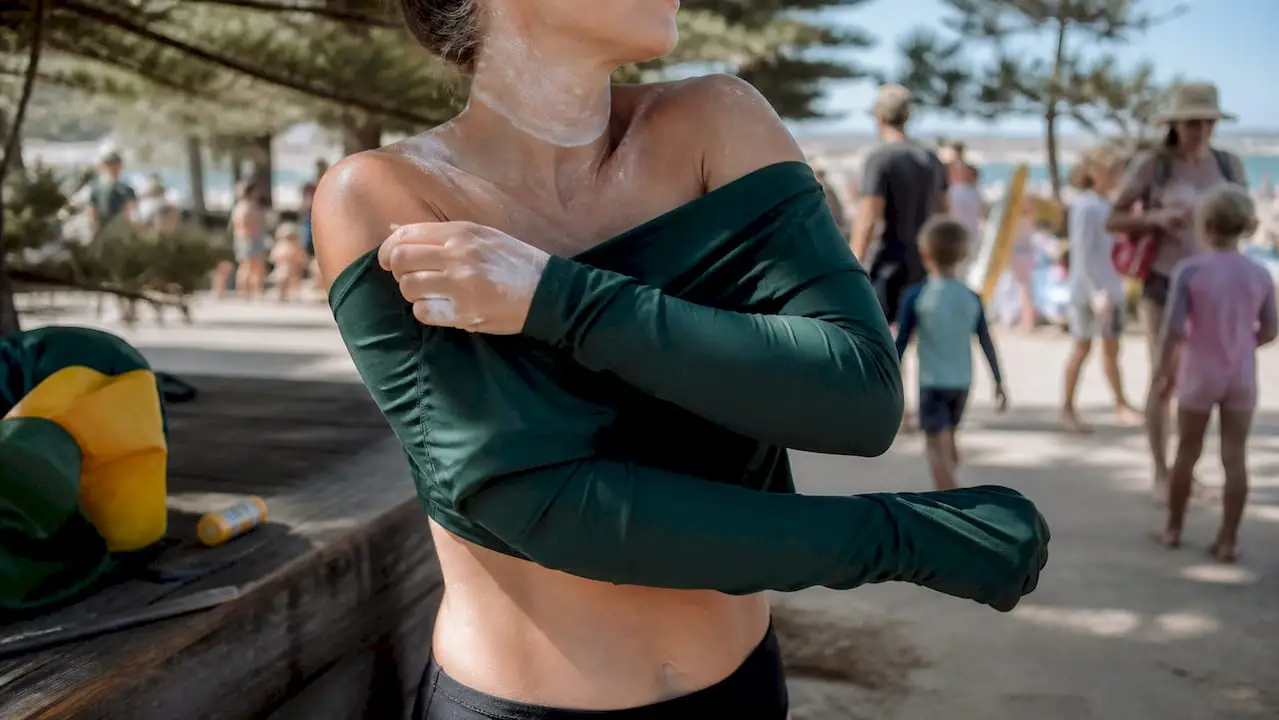
Pro Tip: Guides on snorkel boats recommend applying sunscreen to your face, ears, and neck, then putting on your rash shirt before you apply anything to your arms and shoulders. That way, the shirt covers the areas most likely to wash off into the water, and you use far less product overall.
For format, stick and pump sunscreens are strongly preferred over aerosol sprays on boats. Sprays can drift in the wind and coat surfaces, gear, and the water around the entry point. A stick or lotion applied by hand gives you control over where the product goes.
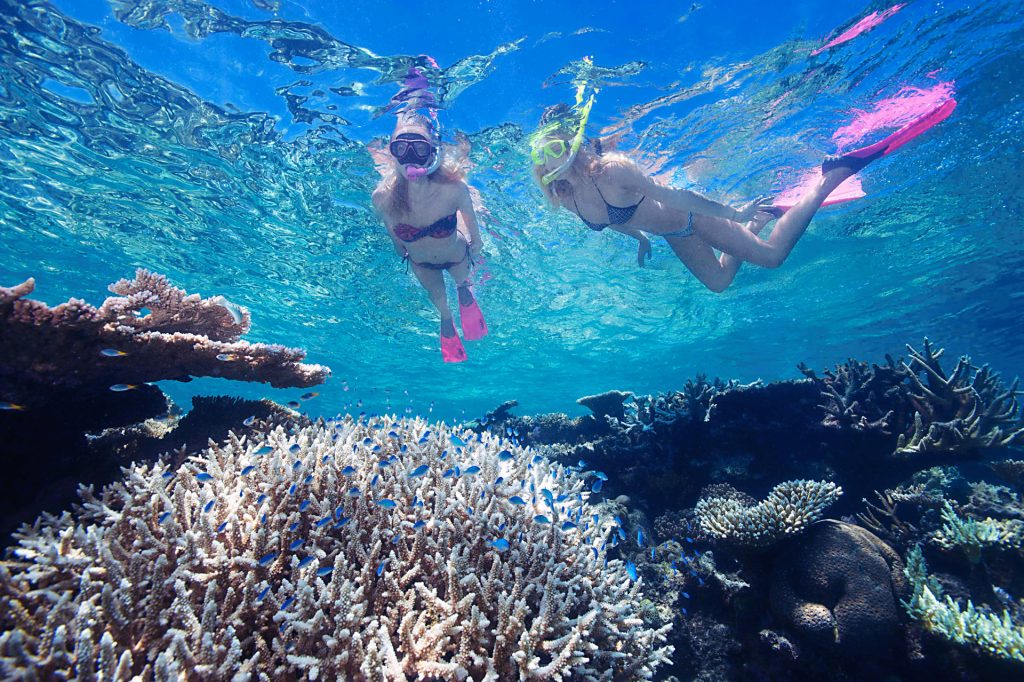
Some operators on Great Barrier Reef snorkelling tours run sunscreen stations on deck with reef-minded mineral options available for guests, and provide pre-departure briefings on reef etiquette that include sunscreen guidance. Checking what your operator provides before you pack can save you the guesswork.
How to dispose of sunscreen packaging responsibly
Sunscreen tubes, bottles, and sticks generate plastic waste that can end up in marine environments if not disposed of correctly. The packaging itself is often as much of an environmental concern as the formula inside.
Most sunscreen packaging in Australia is not accepted in standard kerbside recycling because of residual product contamination. Squeeze out or wipe out as much remaining product as possible before placing an empty tube or bottle in your recycling bin. A tube with significant product remaining should go in general waste to avoid contaminating a recycling batch.
Pump bottles with metal springs are generally not recyclable through kerbside programmes. Check your local council’s guidelines, as acceptance varies by region. Some councils accept clean, empty plastic bottles but not mixed-material pumps.
Terracycle runs specialist recycling programmes in Australia that accept personal care packaging including sunscreen containers. Check the Terracycle website for drop-off locations near you. Some pharmacies and surf retailers also participate in take-back schemes for beauty and personal care packaging.
Stick formats in cardboard or paper tubes are the most packaging-friendly option. Several Australian mineral sunscreen brands now offer cardboard-tube sticks, which are compostable or recyclable depending on the liner material. Check the packaging for disposal instructions before you assume it is compostable.
On reef trips specifically, never rinse or wash sunscreen packaging into the ocean. Dispose of all packaging on the boat or at the marina, and carry a small bag for rubbish if you are kayaking or paddleboarding independently.
A note from Aussie Loop on balancing reef care and sun safety
At Aussie Loop, we believe you should never have to choose between protecting your skin and protecting the reef. Both matter, and the good news is that with the right product and a few sensible habits, you can do both well.
When we recommend reef tours and snorkelling experiences across Queensland, we actively encourage guests to arrive prepared: mineral-filter sunscreen, a rash shirt, and a reapplication plan. Our local operators share the same values, and many provide on-board guidance and reef-minded sunscreen options as part of the experience. The Cairns Turtle Hospital Tour is a vivid reminder of why this matters, showing first-hand the impact that human activity, including sunscreen chemicals, can have on marine life.
Sun safety and reef stewardship are not competing priorities. They are part of the same responsible approach to spending time in one of the world’s most extraordinary natural environments.
Reef tours done right, with operators who care
Seeing the Great Barrier Reef or the Daintree coast with a local operator who genuinely cares about the environment is a completely different experience from a generic group tour. Aussie Loop curates reef and coastal experiences chosen by people who live and work in these places, which means the operators we feature already think carefully about reef etiquette, sunscreen guidance, and responsible guest behaviour.
Browse reef and coastal tours across Queensland to find snorkelling experiences, marine wildlife cruises, and eco-tours led by operators with genuine environmental commitments. If you are heading to the Daintree, the Daintree Afternoon and Nocturnal Tour pairs rainforest immersion with the kind of local knowledge that makes a real difference to how you experience the coast. Aussie Loop earns a referral commission when you book through our links; we only feature operators whose practices we are confident recommending.
Sources
- Banana Boat and Hawaiian Tropic owner in Court over alleged greenwashing claims that its sunscreens were ‘reef friendly’ | ACCC
- Mineral vs chemical sunscreens? Science shows the difference is smaller than you think — UNSW Newsroom
- Sunscreen ingredients — Australia consumer questions | Australian Sunscreen Council
- ACCC accuses Hawaiian Tropic and Banana Boat sunscreens of greenwashing over ‘reef friendly’ claims – ABC News
This article is general information, not a substitute for advice from a qualified doctor. Consult a qualified healthcare professional about your own circumstances before acting on anything here.
FAQ
Which sunscreens are actually reef-safe in Australia?
No sunscreen is certified “reef-safe” by an Australian regulator. The most reef-minded options are broad-spectrum mineral sunscreens listing zinc oxide or titanium dioxide as the sole active filter, with a verifiable AUST number and no oxybenzone, octinoxate, or octocrylene in the full ingredient list. Brands like Invisible Zinc and Surf Mud offer zinc oxide-based formulas widely available in Australian stores.
Which Coles sunscreen is reef-friendly?
Coles stocks several sunscreen brands, including Cancer Council and Banana Boat. For a reef-minded choice, check the ingredient list of any product you pick up: look for zinc oxide or titanium dioxide as the active filter and confirm there is no oxybenzone or octinoxate in the full formulation. The ACCC’s proceedings against Banana Boat’s parent company mean any “reef friendly” badge on those products warrants extra scrutiny.
Is Nivea sunscreen reef-safe?
Nivea sunscreens sold in Australia are primarily chemical-filter formulas and are not marketed as reef-safe. They contain filters such as homosalate and avobenzone, which are among the ingredients under TGA safety review. If reef impact is a priority for you, a zinc oxide or titanium dioxide-based mineral formula is a more considered choice.
Is La Roche-Posay sunscreen reef-safe?
La Roche-Posay’s Australian range includes both chemical and mineral-filter products. Their Anthelios Mineral range uses titanium dioxide and is a more reef-minded option than their chemical-filter lines. Always check the full ingredient list via the ARTG using the AUST number on the pack, as formulations can differ between the Australian and international versions of the same product.