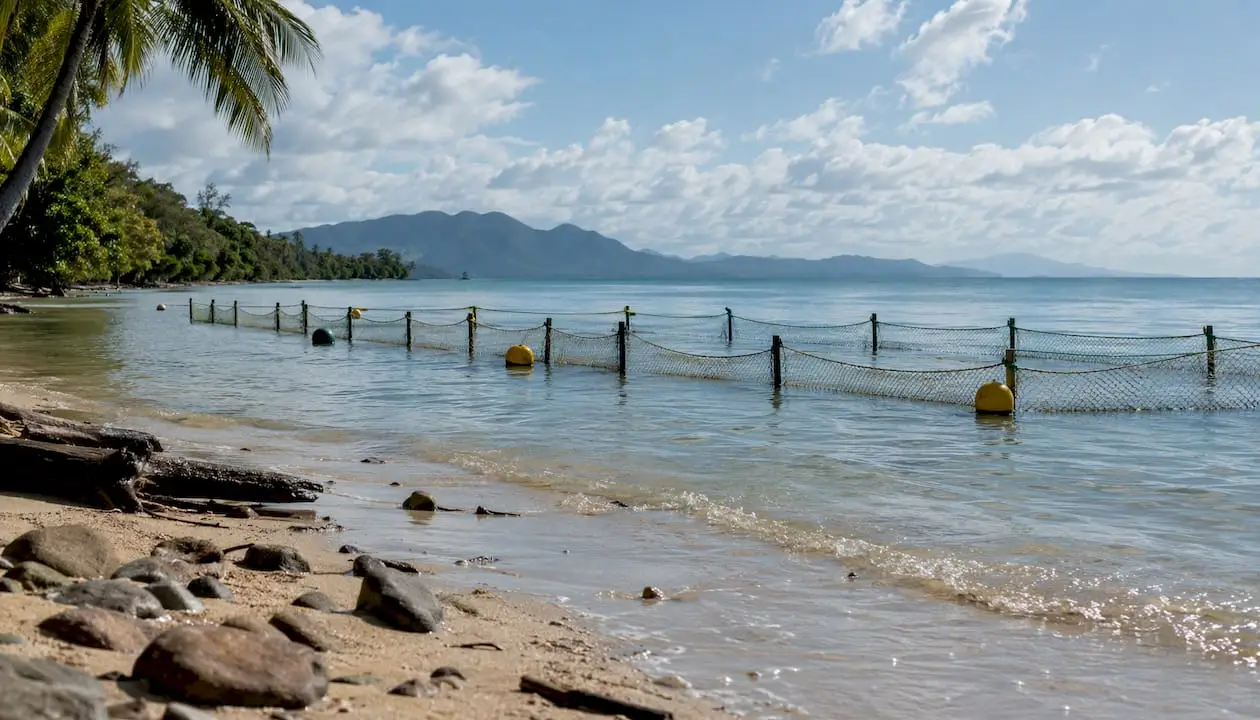
Cairns’ marine stinger season runs from November through to May each year, and the single most important thing you can do is swim only in patrolled stinger enclosures or wear a full-body stinger suit every time you enter the water. If someone is seriously stung, call Triple Zero (000) immediately and apply vinegar to the affected area while you wait for help. These two rules, backed by Surf Life Saving Queensland, Queensland Health, and Ambulance Queensland, are the foundation of staying safe in Cairns waters.
If you take nothing else from this guide: swim between the red-and-yellow flags at patrolled beaches, use a stinger enclosure when one is deployed, and keep vinegar within reach. For anything more than a mild sting, call 000.
Key takeaways
Stinger season in Cairns runs November through May, and the safest approach combines patrolled enclosures, a full-body stinger suit, and vinegar on hand for first aid.
| Point | Details |
|---|---|
| Season dates | Higher risk runs November through May; stingers can occur year-round. |
| Core safety rule | Swim between red-and-yellow flags inside a patrolled stinger enclosure, wearing a full-body suit. |
| First-aid priority | Apply vinegar to the sting site; call Triple Zero (000) for severe or systemic symptoms. |
| Net limitations | Stinger nets block larger box jellyfish but may not stop Irukandji; wear a suit inside the net too. |
| Aussie Loop | Features Cairns tours from operators who publish stinger-season protocols and carry onboard first-aid equipment. |
Table of Contents
- When is stinger season in Cairns?
- Which marine stingers are dangerous in Cairns?
- Where are stingers typically found around Cairns?
- How to plan your water activities safely during stinger season
- What to ask reef tour operators before you book
- What to do if someone is stung
- Where to check current stinger warnings before you swim
- What lifeguards actually do at Cairns beaches during stinger season
- A local perspective on stinger season
- Cairns tours that take stinger season seriously
- Sources
- FAQ
When is stinger season in Cairns?
The official higher-risk window is November through May, driven by Tropical North Queensland’s wet season conditions. Warmer sea temperatures, freshwater runoff from monsoon rains, onshore winds, and shifting tidal patterns all concentrate marine stingers closer to shore during these months. Outside this window, from June to October, conditions are generally calmer and cooler, and the risk drops considerably. But “lower risk” is not the same as “no risk.” Stingers can appear year-round, and the Queensland Government is clear that marine stingers are present in these waters at all times.
Short-term weather events can spike risk even mid-season. A heavy overnight storm, a creek mouth flooding after rain, or a sudden wind shift can push jellyfish into swimming areas that were clear the day before. That variability is why checking conditions on the morning of any water activity matters as much as knowing the season dates.
| Month | Risk level |
|---|---|
| November | Higher risk (season opens) |
| December | Higher risk |
| January | Higher risk (peak wet season) |
| February | Higher risk (peak wet season) |
| March | Higher risk |
| April | Higher risk |
| May | Higher risk (season closes) |
| June | Lower risk (not zero) |
| July | Lower risk (not zero) |
| August | Lower risk (not zero) |
| September | Lower risk (not zero) |
| October | Lower risk (not zero) |
Key factors that increase risk during the season:
- Freshwater runoff after heavy rain flushing stingers toward shore
- Onshore winds concentrating jellyfish near the beach
- Tidal movement through estuaries and creek mouths
- Warmer surface water temperatures typical of the wet season
Which marine stingers are dangerous in Cairns?
Two species demand serious respect: the box jellyfish (Chironex fleckeri) and the Irukandji (Carukia barnesi and related genera). Bluebottles are also common in Queensland waters and can deliver a painful sting, but they are generally far less dangerous than the other two.
Box jellyfish (Chironex fleckeri)
Box jellyfish are among the most venomous marine animals on the planet. They are found in shallow coastal waters, particularly near beaches, estuaries, and creek mouths. Contact with their tentacles causes immediate, intense pain and can result in severe envenomation very quickly. Tentacles can remain active even after the jellyfish is dead or washed ashore, so never touch one on the sand.
Irukandji
Irukandji are tiny, often nearly invisible in the water, which makes them particularly difficult to avoid. Unlike box jellyfish, their initial sting may feel mild or even go unnoticed. The danger lies in what follows: Irukandji syndrome can develop 20–40 minutes after the sting, bringing severe back, chest, and abdominal pain, nausea, sweating, and in serious cases, dangerously elevated blood pressure. Ambulance Queensland’s clinical guidance specifically notes this delayed onset and recommends monitoring anyone who has been stung, even if they initially feel fine.
Symptoms to watch for after any sting:
- Immediate intense local pain or burning at the contact site
- Visible tentacle marks or redness on the skin
- Nausea, dizziness, or vomiting
- Severe back, chest, or abdominal pain developing 20–40 minutes after contact
- Sweating, restlessness, or a feeling of impending doom
- Difficulty breathing or loss of consciousness (call 000 immediately)
Any systemic symptoms, particularly those developing after a delay, should be treated as a medical emergency.
Where are stingers typically found around Cairns?
Stingers are most commonly encountered in shallow, inshore waters rather than out on the open reef. The highest-risk spots include:
- Patrolled beaches along the Cairns foreshore and northern beaches, particularly during and after rain
- Tidal estuaries and creek mouths, where freshwater runoff concentrates jellyfish near the surface
- Shallow reef flats approached from the shore, especially after storms
- Calm, sheltered bays with limited water movement, which allow jellyfish to drift and accumulate
Open-water reef environments carry different risks. Irukandji have been recorded at reef sites, which is why reputable tour operators manage this specifically. The Great Barrier Reef Marine Park Authority (GBRMPA) provides guidance on animals around the reef and on safe operator practices for reef tourism.
Environmental conditions that push stingers toward swimmers:
- Heavy overnight or morning rain flushing creek systems
- Onshore winds from the north or northeast
- Incoming tides moving through estuarine channels
- Calm, glassy mornings with little surface movement
Before you enter the water anywhere in the Cairns region, check the NQB Beach Report from Surf Life Saving Queensland for live patrol and enclosure status.
How to plan your water activities safely during stinger season
Preparation before you leave your accommodation is just as important as what you do at the beach. Here is a practical framework for planning any water activity in Cairns between November and May.
Before you go
- Check the NQB Beach Report for current patrol status, enclosure deployment, and any stinger warnings at your chosen beach.
- Check the Queensland Government’s dangerous marine life page for any active alerts.
- Book a tour operator that clearly states its stinger-season safety procedures (suits provided, vinegar onboard, trained staff).
- Pack or arrange to hire a full-body stinger suit. Many Cairns dive shops and tour operators hire them by the day.
- Know the location of the nearest hospital or medical centre to your planned activity area.
At the beach
- Swim only between the red-and-yellow flags at patrolled beaches. Lifeguards position flags to mark the safest zone.
- Enter the water only inside a stinger enclosure when one is deployed and lifeguards are on duty.
- Obey all beach closures and signage without exception. If a beach is closed, it is closed for a reason.
- Supervise children closely at all times. Children are more vulnerable to envenomation due to lower body mass.
- Avoid swimming after heavy rain, during strong onshore winds, or when warnings are in place.
- Never touch a jellyfish on the sand, even a dead one.
Gear guidance
Full-body lycra stinger suits are the standard choice for most swimmers and snorkellers. They are lightweight, packable, and provide good coverage for the conditions. Neoprene wetsuits offer more thermal protection and are slightly thicker, which some people prefer, though they are heavier to carry. Either way, the suit needs to cover your neck, wrists, and ankles to be effective. Bare skin at the cuffs is a common oversight.
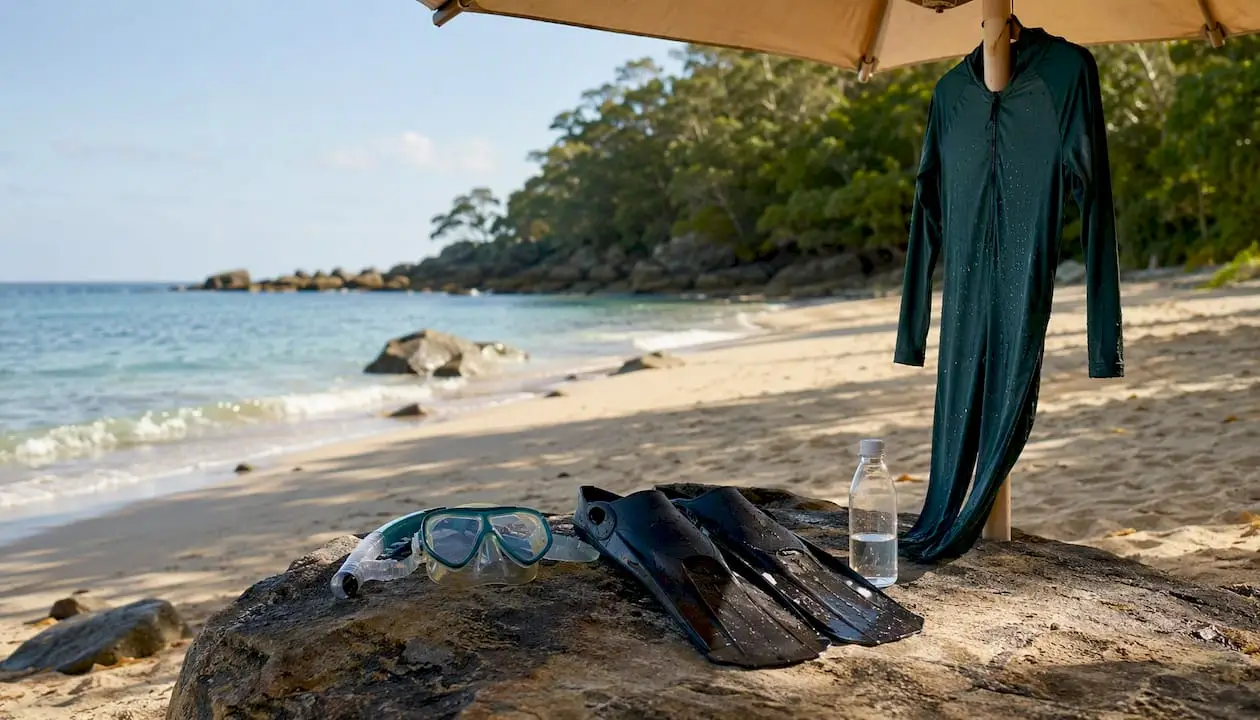
Pro Tip: A well-fitting full-body stinger suit does double duty: it protects against jellyfish contact and significantly reduces UV exposure in the intense Cairns sun. Treat it as standard kit from November through May, not an optional extra.
What to ask reef tour operators before you book
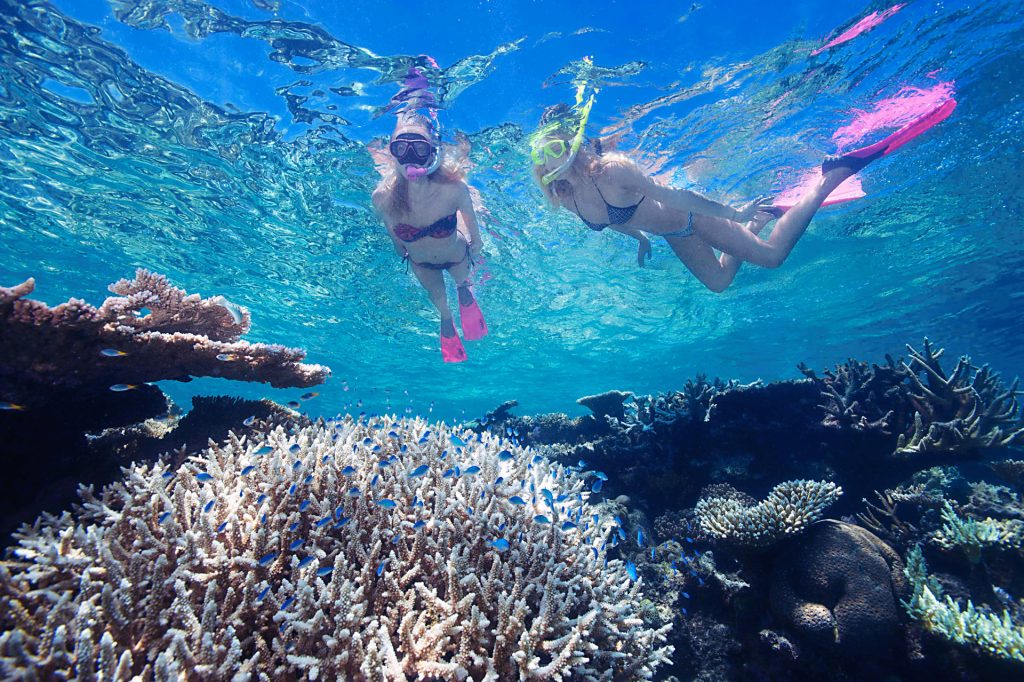
Many reef snorkelling and diving operators run year-round, including through stinger season, with protocols specifically designed to manage the risk. The Tropical North Queensland regional guidance recommends wearing full-body protection and using stinger enclosures during the season, and reputable operators build this into their offering. A half-day Great Barrier Reef snorkelling tour run by a safety-conscious operator, for example, will typically include stinger suits as standard equipment and carry onboard first-aid supplies.
Before you confirm any booking, ask these questions directly:
- Do you provide full-body stinger suits, or do I need to bring my own?
- Do you use stinger enclosures at island or pontoon stops?
- What first-aid equipment do you carry onboard (vinegar, oxygen, trained first-aider)?
- What is your medical evacuation plan if someone is seriously stung?
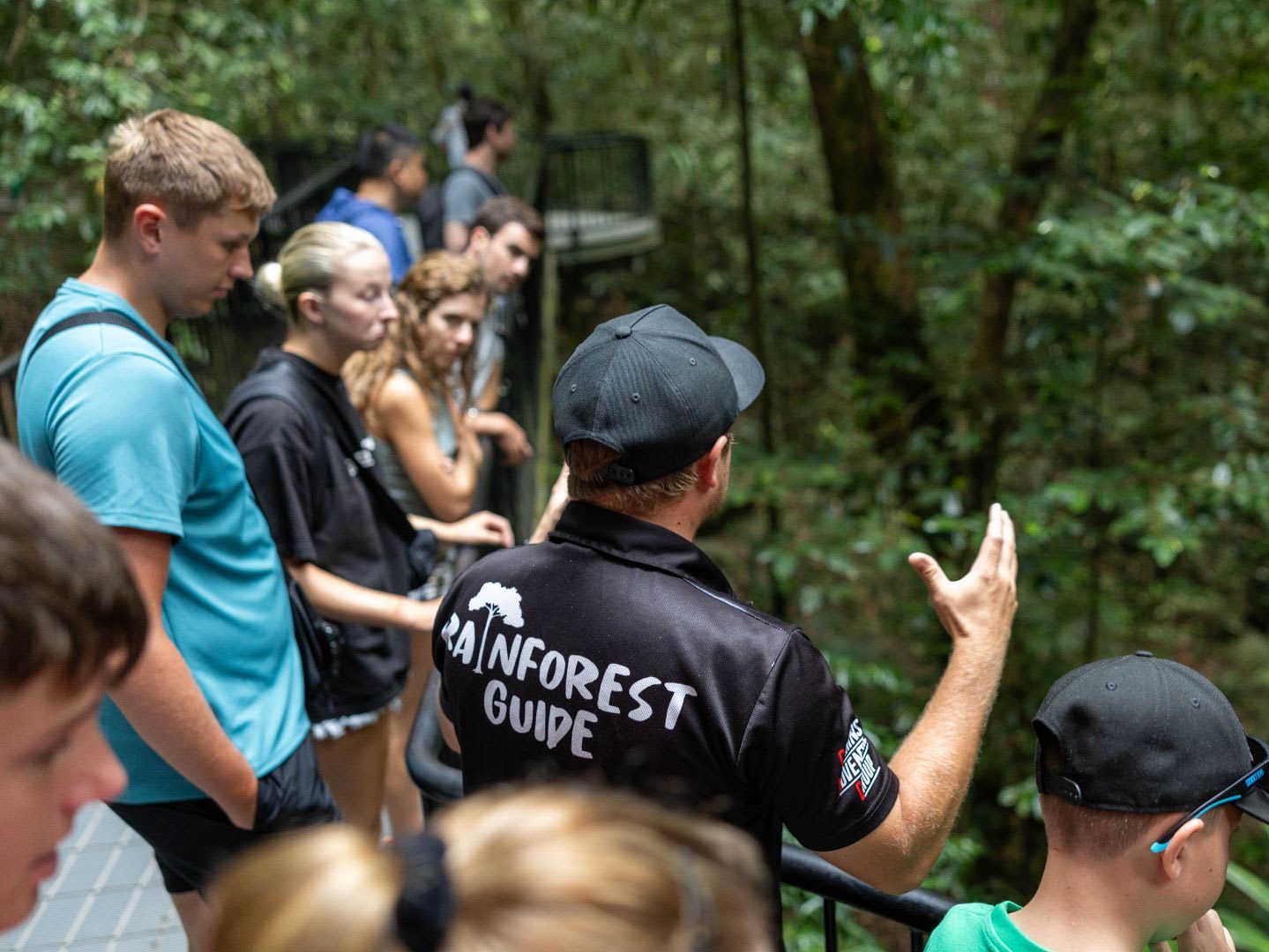
- Are your guides trained in marine stinger first aid?
- Do you follow GBRMPA guidance for reef operator safety?
Operators who answer these questions clearly and confidently are the ones worth booking. Vague answers or a dismissive attitude toward stinger-season protocols is a genuine red flag. GBRMPA guidance for reef operators sets a clear standard for safe practice, and the best operators exceed it.
What to do if someone is stung
Speed and calm matter here. Follow these steps in order.
- Remove the person from the water as safely and quickly as possible. Do not put yourself at risk of stinging in the process.
- Call Triple Zero (000) immediately if the person shows severe symptoms: difficulty breathing, loss of consciousness, severe chest or back pain, or signs of systemic reaction.
- Apply vinegar to the affected area. Ambulance Queensland’s clinical guidance recommends vinegar for box jellyfish stings to deactivate unfired nematocysts. Pour it liberally over the sting site.
- Do not rub the sting site or attempt to remove tentacles with bare hands. Use a card, stick, or gloved hand to carefully lift tentacles away.
- Commence CPR if the person is unresponsive and not breathing. Continue until emergency services arrive.
- Monitor closely for Irukandji syndrome, even if the initial sting seems mild. Symptoms can develop 20–40 minutes after contact.
When calling 000, be ready to give your exact location (beach name, suburb, GPS coordinates if available), the number of people affected, and a description of symptoms. HealthDirect’s sea-creature sting guidance also provides a clear summary of when to seek urgent care versus managing a sting at home.
Where to check current stinger warnings before you swim
Conditions change daily. Checking these sources on the morning of any water activity takes less than five minutes and can make a significant difference to your safety.
- NQB Beach Report, Surf Life Saving Queensland: Live patrol status, stinger enclosure deployment, and beach closures for patrolled beaches across North Queensland. Bookmark this page.
- Queensland Government dangerous marine life page: Official stinger prevention advice and any active marine hazard alerts.
- Cairns Regional Council beach alerts: Check the council’s website or social media channels for local beach closures and warnings.
- Ambulance Queensland and Queensland Health: First-aid guidance and health alerts relevant to marine stingers.
- Your tour operator: Reputable operators monitor conditions daily and will advise you of any changes to the day’s programme. If they are not communicating proactively about stinger conditions during the season, ask them directly.
Check all relevant sources, not just one. A beach might be open per the council but have an active stinger warning from SLSQ. Cross-referencing takes seconds.
What lifeguards actually do at Cairns beaches during stinger season
Understanding what lifeguards do on the ground helps you appreciate both the protection they provide and its limits. The SLSQ Marine Stinger Procedure sets out a detailed operational framework that patrolled Cairns beaches follow from November through May.
Lifeguards deploy stinger swimming enclosures at the start of the season and conduct daily drag-net surveys to sample the water for Irukandji and other species. If stingers are detected inside or near the enclosure, lifeguards follow defined decision rules that can include closing the enclosure for the day. This active monitoring is the primary reason to swim during lifeguarded hours rather than before or after patrols.
The critical limitation to understand: stinger nets are constructed to exclude larger box jellyfish by physical size, but the mesh is not fine enough to reliably stop Irukandji, which are tiny. Drag nets and water sampling provide an additional monitoring layer, but they are not a guarantee. This is why the layered approach matters.
| Protection measure | What it stops | What it does not guarantee |
|---|---|---|
| Stinger net enclosure | Larger box jellyfish (Chironex fleckeri) | Irukandji exclusion |
| Daily drag-net survey | Detects Irukandji presence, triggers closure | Does not prevent all contact |
| Full-body stinger suit | Reduces skin contact with tentacles | Not a complete barrier at all joints |
| Swimming between flags | Keeps you in the monitored zone | Does not eliminate all risk |
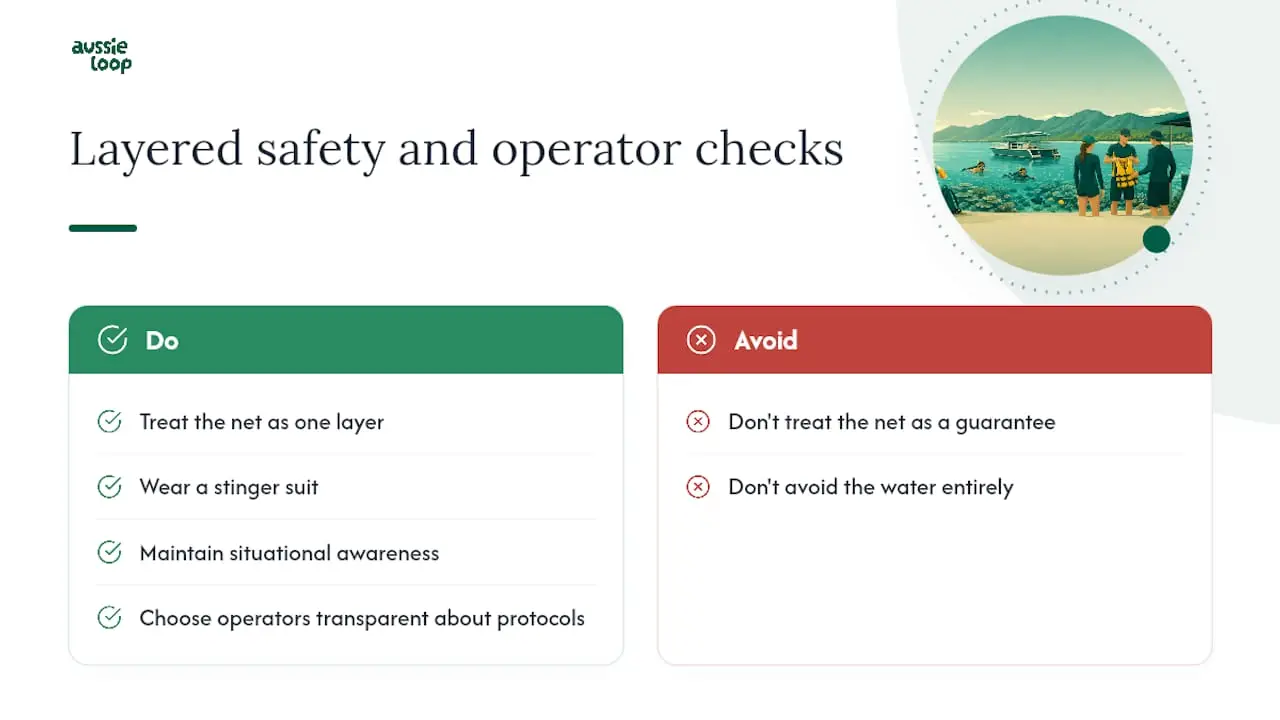
Using all four layers together gives you the best protection available. Relying on just one, particularly the net alone, leaves gaps.
Pro Tip: A netted enclosure with no lifeguard on duty offers reduced protection compared to a manned one. Lifeguards are the active monitoring layer. If the beach is unpatrolled, the net is a passive barrier only.
A local perspective on stinger season
Stinger season in Cairns is one of those topics where well-meaning advice can accidentally create a false sense of security. The most common mistake visitors make is treating the stinger net as an absolute guarantee. It is not. The net is one layer in a system that also requires a lifeguard on duty, a stinger suit on your body, and your own situational awareness.
The second mistake is avoiding the water entirely during the season and missing some of the most extraordinary reef experiences on earth. The Great Barrier Reef does not close for stinger season. Reputable operators run safe, well-managed tours year-round. The difference between a risky reef trip and a safe one comes down almost entirely to the operator you choose and the gear you wear.
At Aussie Loop, the tours we feature in Cairns are selected with exactly this in mind. We look for operators who are transparent about their stinger-season protocols, who carry vinegar and oxygen onboard, and whose guides are trained in marine stinger first aid. That transparency is not just a nice-to-have. It is the clearest signal that an operator takes their duty of care seriously.
Cairns tours that take stinger season seriously
Stinger season does not have to mean staying out of the water or missing the reef. It means choosing the right operator and the right experience.

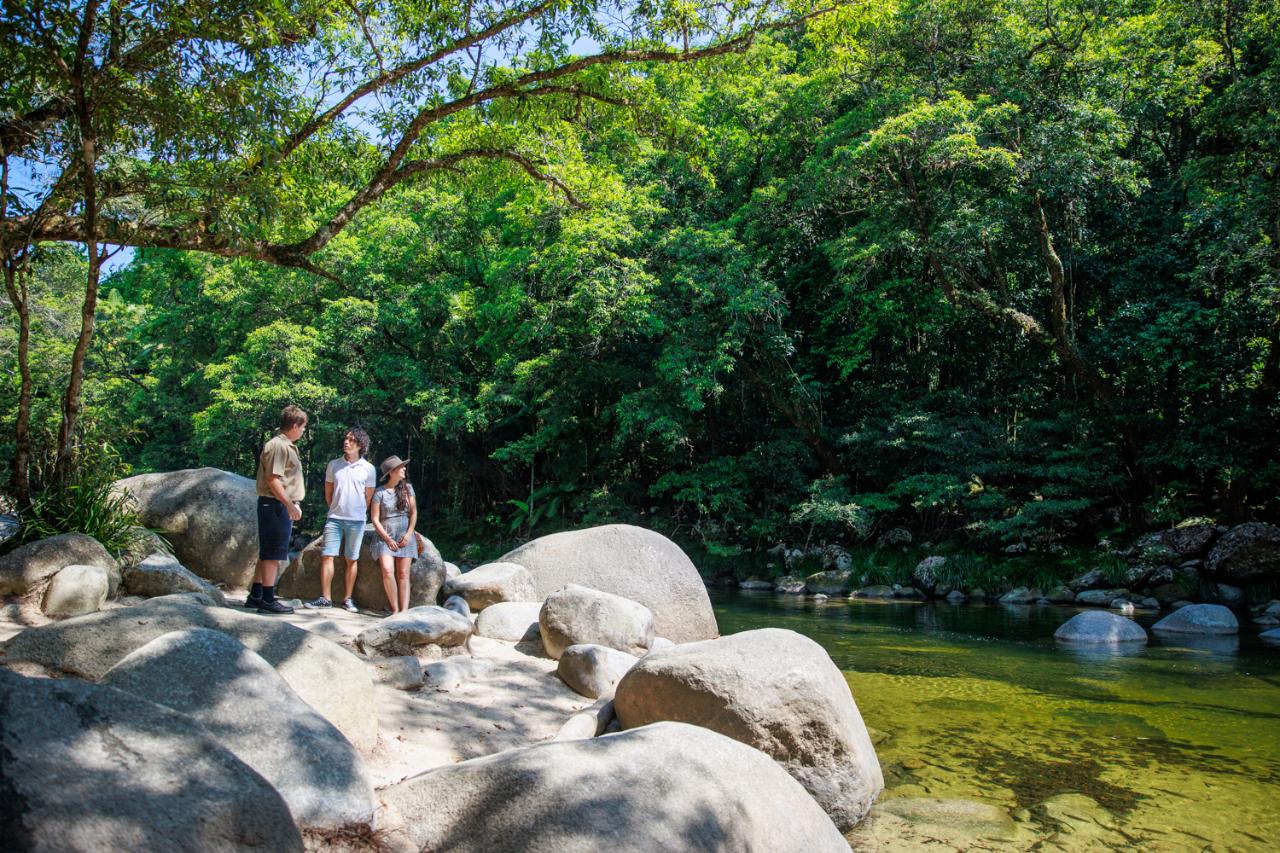
Aussie Loop curates Cairns tours from operators who publish their stinger-season safety procedures and carry the right equipment. Whether you are after a Great Barrier Reef snorkelling experience, a private Mossman Gorge and Daintree River tour, or a Daintree afternoon and nocturnal experience that keeps you on land and in the rainforest, there is a genuinely memorable option for every comfort level. If you prefer to stay shore-side during peak stinger season, the things to do in Cairns beyond the reef guide has you covered with wildlife encounters, cultural experiences, and rainforest adventures. Always follow local lifeguard and operator instructions during stinger season. Browse the full range of curated Cairns tours on Aussie Loop and book with confidence.
Sources
These are the official pages to check for the latest conditions and first-aid guidance before any water activity in Cairns.
This article provides general safety information only. Always follow the instructions of local lifeguards, tour operators, and Queensland Health authorities. Confirm current conditions with the official sources listed above before entering the water.
This article is general information, not a substitute for advice from a qualified doctor. Consult a qualified healthcare professional about your own circumstances before acting on anything here.
FAQ
What months can you swim safely in Cairns?
June through October carries lower stinger risk and is generally the safest period for unprotected swimming. During the November–May season, swimming is still possible but requires patrolled enclosures, a full-body stinger suit, and checking the NQB Beach Report before you go.
Do I need a stinger suit in Cairns?
Yes, during stinger season (November–May) a full-body stinger suit is strongly recommended any time you enter the water, including inside netted enclosures. Stinger nets may not stop Irukandji, so a suit provides an important additional layer of protection.
What is jellyfish season in Cairns?
Jellyfish season in Cairns, officially called marine stinger season, runs from November through May. Box jellyfish and Irukandji are the primary dangerous species during this period, though stingers can be present in Cairns waters at any time of year.
Is stinger season over in Cairns by June?
The higher-risk season ends around May, and June marks the start of the lower-risk period. Stingers can still be present outside the November–May window, so checking current conditions via the SLSQ NQB Beach Report remains good practice year-round.
What should I do if stung by a jellyfish in Cairns?
Remove yourself from the water, apply vinegar to the sting site, and do not rub the area. Call Triple Zero (000) immediately for severe symptoms, difficulty breathing, or any signs of systemic reaction. Monitor for Irukandji syndrome symptoms, which can develop 20–40 minutes after the initial sting.