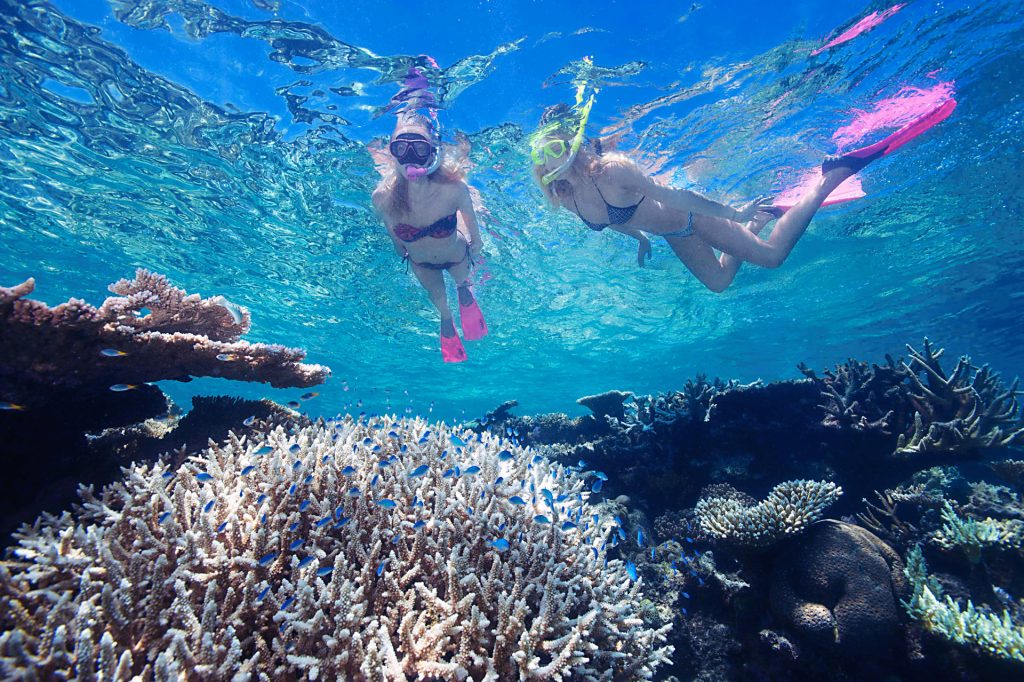
Wearing glasses or contact lenses does not necessarily mean missing out on the Great Barrier Reef. There are several ways for visitors with vision requirements to enjoy snorkelling, diving and other underwater experiences.Diving/Snorkelling masks generally cannot be worn over ordinary glasses, which means many visitors choose a prescription snorkelling mask. Prescription masks are available with corrective lenses and can provide a much clearer underwater view.Prescription masks are readily available on all reef cruise, either for a refundable deposit or small charge.
For people who wear contact lenses, soft lenses are often compatible with snorkelling and diving because the mask creates the necessary air space in front of the eyes. However, individual circumstances vary, so visitors should follow advice from their eye-care professional and the tour operator. Contact lenses are usually no issue but users should be careful with hygiene and follow the manufacturer’s recommendations, particularly when handling lenses around salt water.
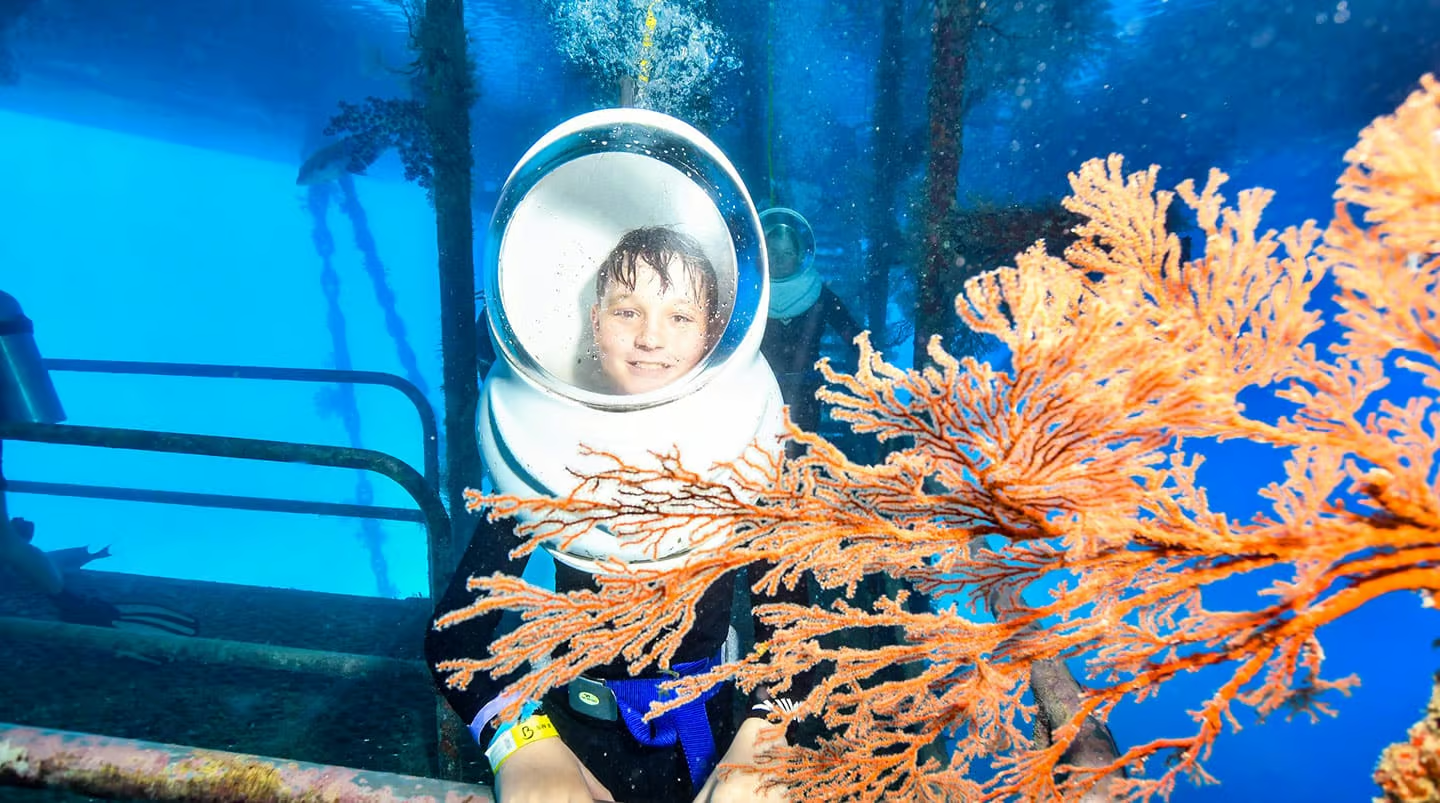
Helmet-diving experiences such as Seawalker or Oceanwalker can be another attractive option. The helmet provides a different viewing arrangement from a conventional scuba mask, and some visitors find it easier because they do not need to wear a standard mask across their face. The helmets usually allow people to wear their standard glasses.
Glass-bottom boats and semi-submersibles are excellent alternatives for people who do not want to enter the water at all. These experiences allow passengers to see coral and marine life while remaining dry.
The most important step is to tell the operator about any vision requirements before departure. Staff can explain what equipment is available and help determine which activity is most suitable.
There is no reason to assume that wearing glasses automatically excludes you from experiencing the reef. Prescription masks, contact lenses, helmet diving and dry viewing options provide several alternatives.